

Glasgow’s hosting the Commonwealth Games again. Twelve years after the city put on one of the best Games anyone can remember in 2014, the whole thing’s coming back. This time they’re doing it on a fraction of the budget, with no new venues and no public money. Here’s everything you actually need to know.

What’s Happening and When
The 2026 Commonwealth Games runs from Wednesday 23 July to Sunday 2 August 2026. That’s 11 days of competition across 10 sports, 6 fully integrated para sports, and 249 medal events in total. Around 3,000 athletes from up to 74 nations and territories will be competing.
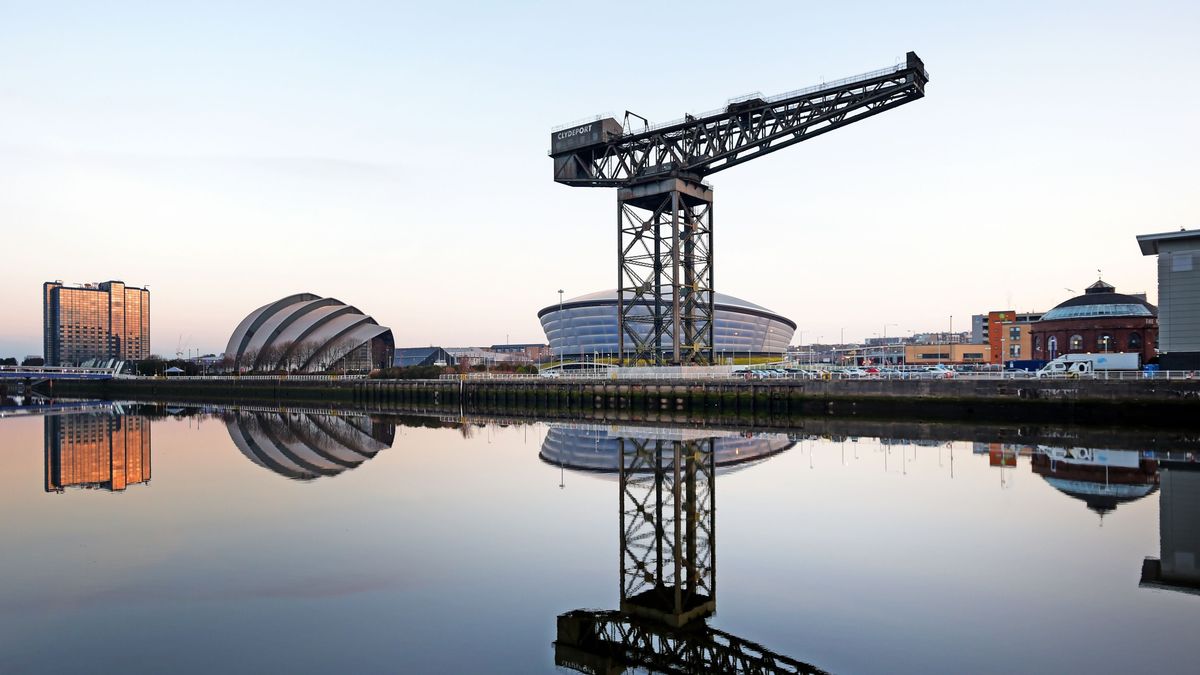
The opening ceremony kicks off on the evening of 23 July at the OVO Hydro. It’ll be the first time in Commonwealth Games history that the opening ceremony has been held indoors, which, given Glasgow’s relationship with the weather, is probably for the best. The closing ceremony is on 2 August.
The Venues: All Existing, No New Builds
One of the smartest things about Glasgow 2026 is that every single venue already exists. No white elephants, no half-finished stadiums, no scramble to get things ready. Everything’s within an eight-mile corridor across the city, so getting between venues is dead simple compared to most major sporting events.
Here’s the full breakdown:
Scottish Event Campus (SEC), Finnieston
The SEC complex on the Clydeside is doing the heavy lifting. It’s actually three separate venues in one:
- OVO Hydro: Opening ceremony, then netball for the rest of the Games (12 teams competing). Capacity 14,500.
- SEC Armadillo: Weightlifting and para powerlifting.
- SEC Centre: Boxing, judo, bowls and para bowls, 3×3 basketball and 3×3 wheelchair basketball. That’s a lot going on under one roof.
Emirates Arena & Sir Chris Hoy Velodrome, Parkhead
Built for the 2014 Games and still going strong. The velodrome hosts track cycling and para track cycling, the biggest track cycling programme in Commonwealth Games history with 26 medal events. The arena next door has artistic gymnastics.
Scotstoun Stadium, Scotstoun
Home of athletics and para athletics. For the first time in Commonwealth Games history, para athletics will include jumping, throwing and track events. All three disciplines on the programme. If you’re only going to one venue, this is where you’ll see the biggest moments.
Tollcross International Swimming Centre, Tollcross
Swimming and para swimming. 56 medal events in total across para and non-para competition. Tollcross was used in 2014 as well and it’s a brilliant pool. Proper atmosphere when it’s full.

For a detailed breakdown of how to actually get to each venue, check our transport and travel guide.

Every Sport at Glasgow 2026
The programme’s been stripped back compared to previous Games. No cricket, no hockey, no rugby sevens, no squash. What’s left is a tight 10-sport programme with full para sport integration across six of them. Here’s the lot:
| Sport | Venue | Para Integration |
|---|---|---|
| Athletics | Scotstoun Stadium | Yes, Para Athletics |
| Swimming | Tollcross International Swimming Centre | Yes, Para Swimming |
| Track Cycling | Sir Chris Hoy Velodrome | Yes, Para Track Cycling |
| Artistic Gymnastics | Emirates Arena | No |
| Boxing | SEC Centre | No |
| Judo | SEC Centre | No |
| Weightlifting | SEC Armadillo | Yes, Para Powerlifting |
| Bowls | SEC Centre | Yes, Para Bowls |
| Netball | OVO Hydro | No |
| 3×3 Basketball | SEC Centre | Yes, 3×3 Wheelchair Basketball |
That’s 249 medal events total, including a record 47 para medal events. The para sport integration is genuinely impressive. It’s not a separate programme bolted on, it’s woven right through the whole Games.
Tickets: Prices, Where to Buy, What’s Left
Tickets are on general sale now. Prices are reasonable compared to what you’d pay for most major sporting events:
- Non-medal sessions from £17
- Medal sessions from £26
- Concessions from £12
There are around 500,000 tickets in total across the Games. Buy them through the official portal at glasgow2026.tmtickets.co.uk.
A word of advice: the athletics finals and swimming finals will sell out first. If those are on your list, don’t hang about. The non-medal heats and earlier rounds are genuinely good value though. You’re right on top of the action and the atmosphere in a half-full arena is still class.
How to Watch on TV
Here’s where things get a bit contentious. For the first time since 1954, the BBC will not be the live broadcaster of the Commonwealth Games. That’s 72 years of coverage gone.
TNT Sports has the exclusive UK live broadcast rights, as part of a deal between Commonwealth Sport and Warner Bros. Discovery. They’re promising over 600 hours of live coverage across a dedicated linear TV channel and streaming on HBO Max, which launched in the UK in March 2026.
What that means in practice:
- Live coverage: TNT Sports (TV) and HBO Max (streaming). You’ll need a subscription to one or the other.
- HBO Max standalone: You can subscribe to HBO Max without a full TNT Sports package. UK pricing hasn’t been confirmed yet, but it’s around £4-5 a month in other European countries.
- BBC: The Commonwealth Games are a Category B listed event in the UK, which means the BBC can show highlights but not live action. Details of what that actually looks like haven’t been confirmed yet.
There’s no getting around the fact that putting the Commonwealth Games behind a paywall is going to annoy a lot of people, especially in Glasgow. The 2014 Games on the BBC were a shared experience. Everyone was watching. This time it’ll be different. Whether that matters to you depends on how much you’re willing to pay.
Meet Finnie, The Mascot
The official mascot is Finnie, and honestly, they’ve nailed it. She’s a unicorn, Scotland’s national animal, with a traffic cone for a horn. If you’ve ever walked past the Duke of Wellington statue outside the Gallery of Modern Art in the city centre, you’ll get the reference immediately. The cone on the Duke’s head is one of Glasgow’s most iconic bits of nonsense and they’ve turned it into a mascot. Brilliant.
Finnie’s named after the Finnieston Crane, the massive disused cantilever crane on the Clyde. Her design was created with input from 76 kids across 24 Glasgow schools, the “Mascot Makers.” Other wee details: silver flashes on her shoes for Glasgow’s shipbuilding heritage, stars referencing the Barrowland Ballroom, and a purple mane that nods to the Hydro.
She was unveiled on 23 July 2025, exactly one year out from the opening ceremony, standing on top of the Finnieston Crane itself.
The Budget: How Glasgow 2026 Is Different
This is probably the most interesting part of the whole thing. The projected budget is approximately £150 million. To put that in perspective, Birmingham 2022 cost around £778 million. Glasgow 2014 was north of £500 million. This is a fundamentally different model.
Here’s how they’re doing it:
- No public funding. Glasgow 2026 hasn’t asked for and doesn’t require public money from Glasgow City Council, the Scottish Government, or the UK Government. The UK Government has offered £2.3 million as contingency for security costs, but the core budget is privately funded.
- £100 million from the Commonwealth Games Federation (CGF). This is the foundation of the budget.
- The rest from commercial revenue. Ticket sales, broadcast rights (the TNT Sports deal), sponsorship, and merchandise make up the balance.
- No new venues. Using four existing world-class venues means zero capital construction costs. That alone saves hundreds of millions.
The organisers reckon the Games will deliver over £100 million of inward investment into Glasgow and support over £150 million of economic value for the region. Whether those projections hold up remains to be seen. Economic impact claims from major sporting events are always worth taking with a pinch of salt. But the point is they’re not gambling public money on it.
What’s Missing Compared to Previous Games
Worth being honest about what’s not here. The 2014 Games had 18 sports across venues all over Glasgow and beyond (Cathkin Braes, Barry Buddon, Kelvingrove). This time it’s 10 sports in four venues. No hockey, no rugby sevens, no squash, no badminton, no cricket, no table tennis, no triathlon, no shooting, no diving.
That’s the trade-off for the stripped-back budget. Some folk will be gutted. The hockey at Glasgow Green in 2014 was class, and the mountain biking at Cathkin Braes was a genuine highlight. But the old model of Commonwealth Games was broken. Victoria pulled out, Durban pulled out, Birmingham nearly collapsed under the weight of it. Glasgow’s offering a way forward that might actually be sustainable.

Planning Your Visit
We’re putting together a full series of guides to help you make the most of Glasgow 2026, if you’re local or travelling in:
- Getting Around Glasgow During the Games. Trains, buses, subway, parking, and the free Games shuttle. How to actually get to each venue without losing your mind.
- Where to Eat Near Every Venue. Proper food recommendations near each of the four venues, from quick bites to sit-down places. No chains, no tourist traps.
- Where to Stay for Glasgow 2026. Hotels, Airbnbs, budget options and what areas to book in. Expect prices to jump, so book early.
- Things to Do Between Events. Glasgow’s got plenty going on beyond the Games. Museums, parks, pubs, day trips, what to do when you’re not watching sport.