

Is Maryhill rough or safe? It has a rough name, and the police figures are more middling than that: recorded crime in the Maryhill ward is above the Scottish average, below the Glasgow average and about the middle of Glasgow’s 23 wards. Maryhill isn’t really in the West End, though the south end of Maryhill Road is right next to it. Rents are only a little under the Glasgow average, but lower than in Hillhead and Hyndland, and Gilshochill, at the north end, is a mostly residential corner with its own station.
Last checked: 24 October 2026.
Maryhill: Cheaper Than the West End, a Canal and a Reputation It Can’t Shake
Maryhill is one of those Glasgow areas that people have strong opinions about before they’ve ever set foot in it. Mention it in conversation and you’ll get raised eyebrows. Some of that comes from old stories, and plenty of the folk repeating them haven’t been up Maryhill Road in years.
The truth’s more mixed. Maryhill costs less than the West End, it has real character, and it’s changing, slowly. The canal got a £14m bridge in 2022, the Burgh Halls are restored, and Wyndford’s 401 new homes got the green light in October.
Where Is Maryhill? Is It in the West End?
Maryhill is in the north west of Glasgow, about two and a half miles from the city centre. Maryhill Road, the long main road through it, runs north west from St George’s Cross, where it meets Great Western Road. Most of the area is in the G20 postcode, which also takes in Ruchill and North Kelvinside. Summerston is G23, and so is the Gilshochill station address.
There’s no single official line round it. Understanding Glasgow, the data site run by the Glasgow Centre for Population Health, covers it in two profiles: the Maryhill Road corridor, home to about 16,300 people, and North Maryhill and Summerston, with about 12,900. The police figures below use the council ward, which doesn’t line up exactly with either.
Is Maryhill in the West End? Not really. The West End is the Byres Road, Hillhead and Partick side of town, and Maryhill is the next area north. Visit Glasgow’s West End page covers Kelvinbridge, Partick and Great Western Road, but it doesn’t mention Maryhill.
The two do meet at the south end of Maryhill Road, though, and the Woodside Inn, on the corner of North Woodside Road, calls itself a pub in the West End. If you want to be properly inside it, Kelvinbridge is the closest bit, and our Hillhead and the West End guide covers the rest.
What’s It Like?
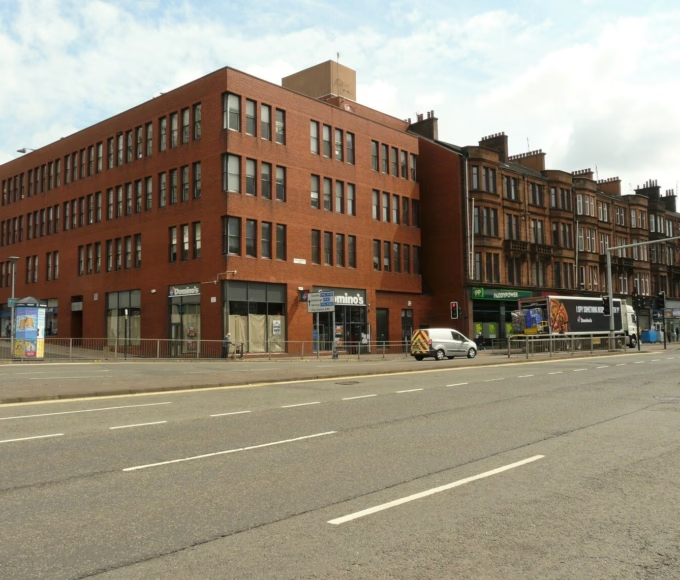
Maryhill is a long, narrow area and it changes as you go. The south end, around St George’s Cross and Woodside, is tenements close to the West End. The middle has the canal, the Burgh Halls and Wyndford. Further north, around Summerston and Gilshochill, it’s quieter and more residential.
The Forth and Clyde Canal runs right through Maryhill and it’s the area’s best feature by a mile. The towpath is a brilliant walk or cycle, and it goes east all the way to Falkirk, where the Falkirk Wheel links the canal to the Union Canal. Stockingfield Bridge, which opened in 2022, closed the last gap in the towpath through North Glasgow.
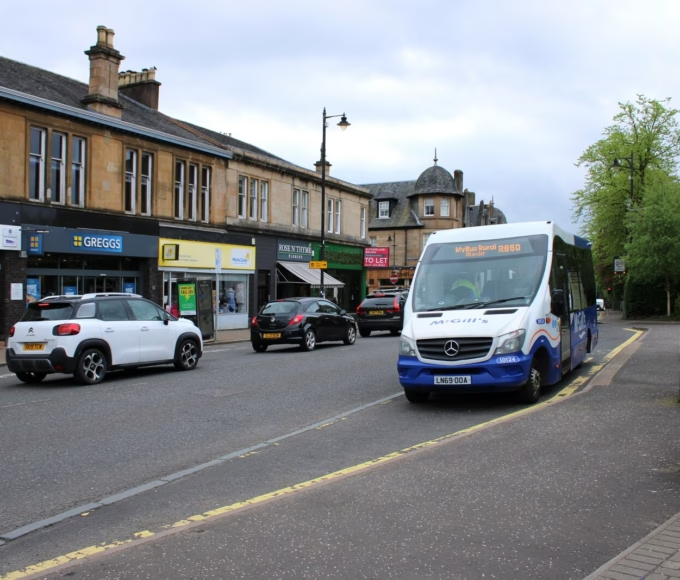
Maryhill Road is the main drag. It’s a bit of a mixed bag: takeaways, bookies, charity shops, a Tesco Extra and a few decent local businesses. It’s not glamorous, and there are enough barbers to suggest the area doesn’t need any more barbers. But it’s functional, and you can get what you need without going into town.
The people here are a proper mix. About three in four residents along the Maryhill Road corridor are of working age, and at the 2022 Census around 70% of adults there had Higher-level qualifications or above, against 58% across Glasgow. Further north, in North Maryhill and Summerston, there are more families, and at the same Census 53% of households owned their home, against 47% across Glasgow.
Wyndford sits in the middle of Maryhill, and it’s changing fast. Its four tower blocks came down in 2025, three of them by controlled explosion in March. In October 2026 the council’s planning committee approved 401 new homes on the site, 343 for social rent and 58 for mid-market rent, plus a community centre with a café. They replace about 600 flats, so there’ll be fewer but larger homes, and building is expected to start in mid-2027.
By day, Maryhill Road is a working high street. After dark, the Woodside Inn is open until 11pm, and midnight on Fridays and Saturdays. The police figures don’t say what time of day crimes happen, so there’s no night-time number to give you. Late on, stick to the busier, well-lit roads, same as anywhere in Glasgow.
Is Maryhill Rough? Is It Safe?
Maryhill has had a rough name for years, and it still comes up the minute anyone mentions moving here. The official figures tell a more middling story.
Police Scotland publishes recorded crime for every council ward, though it says the figures are provisional and not directly comparable with official statistics, so treat any comparison as a rough guide. The Maryhill ward takes in Wyndford, Summerston and Gilshochill as well as the main part of Maryhill, but not every street that gets called Maryhill.
In 2024-25, the last full year Police Scotland has published for wards, the ward recorded 1,349 crimes (not counting motoring and minor offences) for about 20,700 residents (the National Records of Scotland mid-2024 estimate). That’s roughly 65 crimes for every 1,000 people. The Scottish Government’s figures for the same year were about 55 per 1,000 for Scotland and about 83 for Glasgow City.
So Maryhill sits above the Scottish average and below Glasgow’s, and in the middle of the pack among Glasgow’s 23 wards. The first nine months of 2025-26 show the same order against Scotland and Glasgow.
A lot of what gets recorded is everyday stuff. The biggest categories were vandalism (173 crimes), shoplifting (159) and common assault (116 without injury, 83 with). Serious violence is a small slice: 31 serious assaults and 10 robberies across the whole ward.
The deprivation figures tell a similar story. Understanding Glasgow’s profiles use the Scottish Government’s deprivation index, SIMD 2020, which is still the latest edition. They count about one in five people in both the Maryhill Road corridor (20.1%) and North Maryhill and Summerston (19.8%) as income deprived, meaning their household is on a low income or certain benefits. That’s level with the Glasgow average of 19.5% and above the Scottish average of 12.1%.
None of that tells you about one particular street. Plenty of Maryhill is quiet tenements and flats, and the area has had real investment in the canal path and the Burgh Halls, with new homes coming at Wyndford. So view any flat at different times of day, ask a neighbour or two, and use the same common sense you would anywhere in Glasgow.

Is Gilshochill a Nice Place to Live?
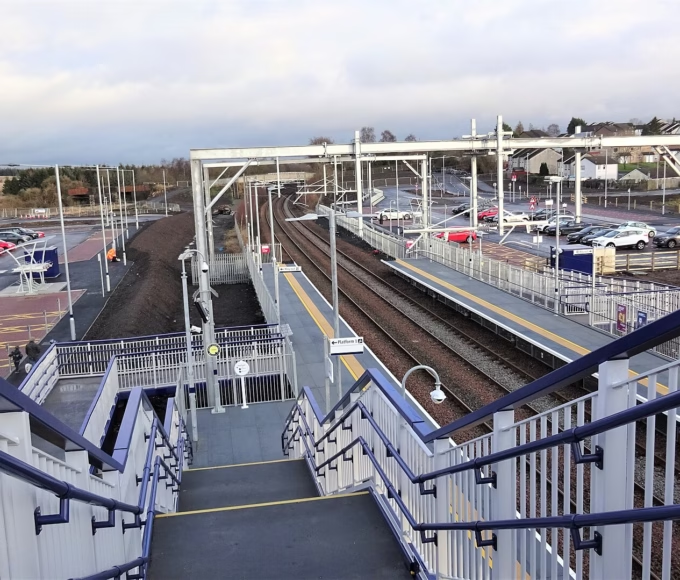
It can be, if you’re happy with a quieter area. Gilshochill is at the north west end of Maryhill, by the canal at Stockingfield Junction, and it’s mostly residential. It has its own station on the Maryhill line, on Cadder Road, and since 2022 Stockingfield Bridge has linked it across the canal to Maryhill and Ruchill.
The police figures above include Gilshochill, because it’s in the Maryhill ward, but they don’t break it out on its own, and Understanding Glasgow has no separate Gilshochill profile either. So go and look at the street itself, by day and after dark. Bear in mind that Gilshochill station has no step-free access to the platforms and no parking.
Rent and Property
Maryhill is cheaper than the West End, but only a little under the Glasgow average. Citylets, which tracks the rents advertised on its site, put the average one-bed in the G20 postcode at £884 a month in the second quarter of 2026, and the average two-bed at £1,168. The Glasgow averages were £912 and £1,211, so G20 is £28 a month cheaper for a one-bed and £43 for a two-bed. Flats there took about a month to let.
The saving is bigger against Hillhead and Hyndland. G12, which also covers Kelvinside, averaged £1,005 for a one-bed and £1,446 for a two-bed.
| Postcode | Average one-bed | Average two-bed |
|---|---|---|
| G20 (Maryhill, Ruchill, North Kelvinside) | £884 | £1,168 |
| G11 (Partick, Broomhill) | £913 | £1,305 |
| G12 (Hillhead, Hyndland, Kelvinside) | £1,005 | £1,446 |
| Glasgow average | £912 | £1,211 |
Those are averages a month for April to June 2026. Citylets only publishes postcodes with plenty of lettings, and G23, which covers Summerston, isn’t in its table. Our cost of living in Glasgow guide shows how far your money goes in different parts of the city.
Buying is well below the city average. In 2023, the latest year in Registers of Scotland’s small-area house price figures, the middle sale price in the areas it calls Maryhill East, Maryhill West and Wyndford was £105,000, £116,750 and £108,500. Across Glasgow it was £173,000, and across Scotland £185,000. Those cover every kind of home, and each area had only 33 to 40 sales, so treat them as a guide.
The quality varies a lot. Some flats are well-kept sandstone tenements with high ceilings and original features, and others are ex-council stock that hasn’t seen a paintbrush in years. Always view before you sign anything, and if you’re buying, read the Home Report. The street matters more than the postcode here.
Transport Links
Maryhill’s transport is decent but not brilliant. The Subway only touches the south end, so for the rest of the area it’s trains and buses.
Trains. The Maryhill line runs between Glasgow Queen Street and Anniesland. The stops for this area are Gilshochill, Summerston and Maryhill, and Kelvindale comes just before Anniesland, where you can change for the Argyle and North Clyde lines. It’s not the most frequent service, so check the timetable before relying on it.
Maryhill station, on Station Road, has step-free access to all platforms, though some of the routes to them involve long or steep ramps. Summerston has some step-free access, and Gilshochill has none. None of the three has parking. Maryhill and Gilshochill have bike storage, but Summerston doesn’t.
Subway. St George’s Cross station is at the south end of Maryhill Road, where it meets Great Western Road, and Kelvinbridge is the next stop round the circle. SPT has the station list and map. Further up Maryhill, you’ll want the train or the bus.
Buses. Several routes run along Maryhill Road into the city centre, and for most of Maryhill the bus is the everyday option. Check the operators’ timetables for your stop, because routes and times change.
Car and bike. Maryhill Road runs straight into the city centre and the M8 is close. The canal towpath is a good traffic-free route for cycling. Plenty of folk get by without a car: at the 2022 Census, 48% of households on the Maryhill Road corridor had a car or van, against 56% across Glasgow.
Eating and Drinking
Maryhill isn’t a food destination. Let’s just get that out the way. A few places are worth knowing about.
- The Woodside Inn (known locally as “The Woody”) is at 239 Maryhill Road, on the corner of North Woodside Road. Its own website says there’s been a pub on the spot for 150 years. It’s a proper local with live sport on the telly, karaoke, food served from 12 to 7pm every day, and a welcome for dogs and families. Partick Thistle fans use it on match days, because Firhill is a short walk up the road.
- Café D’Jaconelli at 570 Maryhill Road is an old-school café with a 1950s interior that has been going since 1924. A Scottish Parliament motion marked its 100th year in business in 2024. We couldn’t find a website for it, so just call in.
- Jaconelli’s Chip Shop at 1419 Maryhill Road is a family-run chip shop, and a separate shop from the café. It’s open until 9.45pm Monday to Friday and 9.30pm at the weekend.
For proper restaurants, you’re heading south towards the West End. Living in Maryhill means West End restaurants a short trip away on lower rent than the West End’s, which isn’t a bad deal. Our guides to the best pubs in Glasgow and the best coffee shops will point you in the right direction.

Things to Do
The Forth and Clyde Canal is probably the best thing about Maryhill. Walk it, cycle it, or just sit by the locks on a decent day. The Maryhill Locks are a flight of five, numbered 21 to 25, that opened with the canal in 1790. Our best walks near Glasgow guide has more routes, including the Kelvin Walkway out towards Maryhill.
One heads-up: Scottish Canals has bypass works planned at Lock 21 this winter, so check for towpath detours before a long walk.
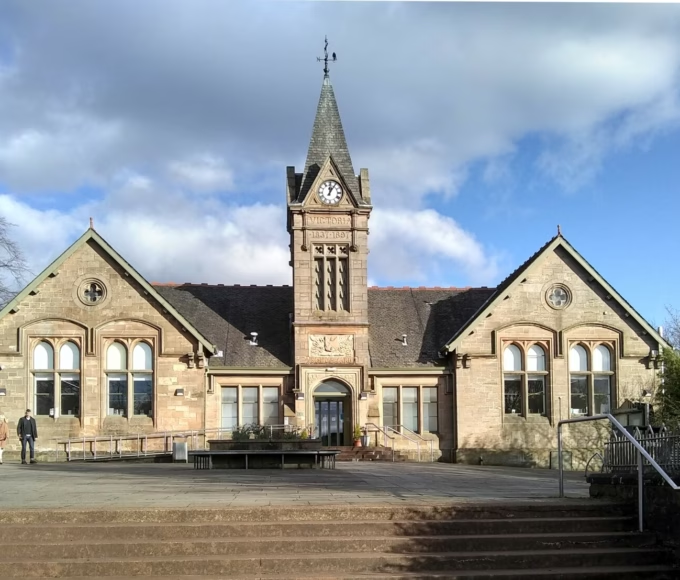
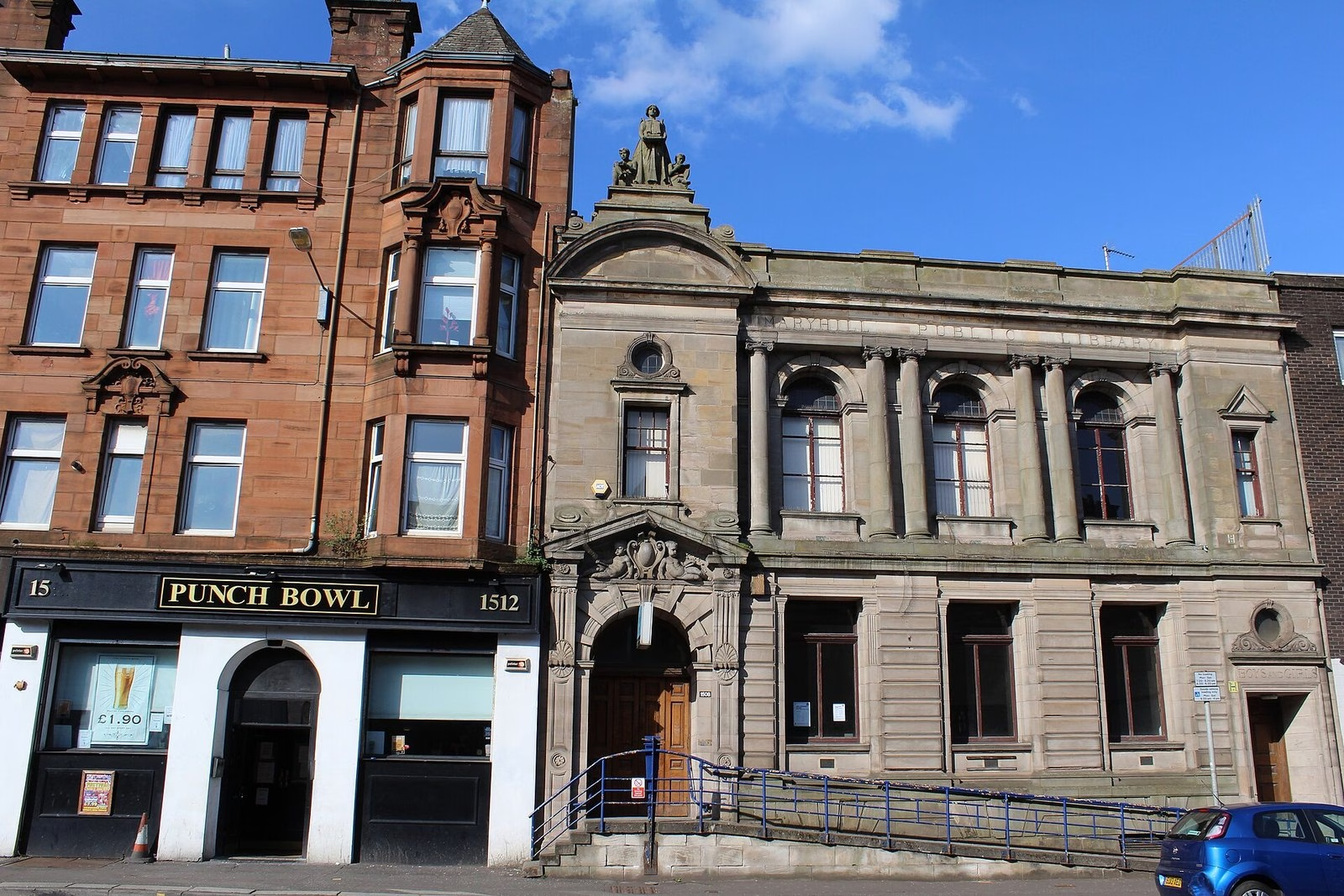
Maryhill Burgh Halls on Gairbraid Avenue is a B-listed building from 1878. It reopened in April 2012, and a Scottish Parliament motion credits the trust with saving it from demolition and securing £9.6 million to redevelop it. The trust runs exhibitions, talks, tours and community events, and says it will soon house Maryhill Museum. It’s the community hub of the area.
The Botanic Gardens are free and open from 7am until dusk, about a 20-minute walk from Woodside or St George’s Cross. The glasshouses, where you’ll find the Kibble Palace, open from 10am to 6pm, or 4.15pm in winter.
For a night out, the Queen Margaret Union at 22 University Gardens puts on ticketed gigs, and Òran Mór, at the top of Byres Road, runs the lunchtime theatre “A Play, A Pie and A Pint” plus other events and shows. For a swim, Glasgow Club Maryhill on Gairbraid Avenue has a 25m pool.
Schools and Families
St Mary’s Primary on Kilmun Street is a long-established Catholic primary. A Scottish Parliament motion from March 2024 says it first started delivering denominational education in 1851 and supports close to 300 pupils. The council lists it in the John Paul Academy learning community, so John Paul Academy, a Catholic secondary on Arrochar Street in Summerston, is its linked secondary.
Caldercuilt Primary is on Invershiel Road in Summerston. Catchments go by address, so check yours with the council before you sign a lease or put in an offer, and that goes for non-denominational secondaries too. Our school catchment guide explains how it works.
For nurseries, Glasgow Families Information Services, which the council runs, lists nurseries, childminders and out-of-school care near you.
Parking
Parking in Maryhill depends on the street. At the Woodside end, the North Kelvin and North Woodside resident permit zone sits just south of Maryhill Road, and the council has announced new parking zones in a dozen more areas of the city. Check which zone a street is in before you sign a lease or buy, and our parking permits guide explains how the zones and permits work. If you need a car for work, ask the landlord or seller about parking before you commit.
Is Maryhill a Nice Place to Live? The Verdict
Maryhill is a good fit if you want a flat near the West End for less rent, if you like canal walks and cycling, or if you’d rather have a quieter, more residential spot further north. It’s not for you if you want a Subway station on your doorstep outside the south end, or restaurants on every corner.
The rough name is only part of the picture. The police numbers put Maryhill in the middle of Glasgow’s wards, and deprivation sits level with the city average, so it’s a typical Glasgow area with some streets nicer than others. View flats in person before you sign anything.
The Burgh Halls are beautiful, the canal towpath is one of the best in the city, and new homes are coming at Wyndford. Maryhill isn’t trendy and it’s not trying to be. It’s a practical area with more going for it than most folk realise. If you can stretch the budget, Kelvinbridge is just down the road with a Subway station of its own.
Maryhill FAQs
Is Maryhill safe at night?
Police Scotland’s ward figures don’t say what time of day crimes happen, so there’s no night-time number to quote. Stick to busier, well-lit roads when you’re walking home late, as you would anywhere in Glasgow.
Is Maryhill a nice place to live?
For plenty of folk it is: canal walks, a restored Burgh Halls, decent bus and train links and rents below the West End’s. It depends a lot on the street.
Is Gilshochill a nice place to live?
It’s a quieter, mostly residential corner of Maryhill, with its own station and a bridge over the canal to Maryhill and Ruchill. Go and see the street you’re thinking of by day and after dark.
Is Maryhill in the West End of Glasgow?
Not really. It’s the next area north. The south end of Maryhill Road, around St George’s Cross and Woodside, is right next to the West End, but most of Maryhill is further up the road.
Written by Lewis McGuire. Last updated October 2026.