


Is Merchant City safe? Mostly, yes, with the usual city-centre sense. Police figures for its council ward show more recorded crime per resident than anywhere else in Glasgow, much of it shoplifting and other theft, but that ward covers most of the city centre and the crowds push the figures up. Merchant City itself is roughly the grid of streets between George Street, High Street, the Trongate and Queen Street, and a one-bed in the G1 postcode averaged £1,009 a month in April to June 2026.
Last checked: 24 October 2026.
Where Is Merchant City, and What Is It?
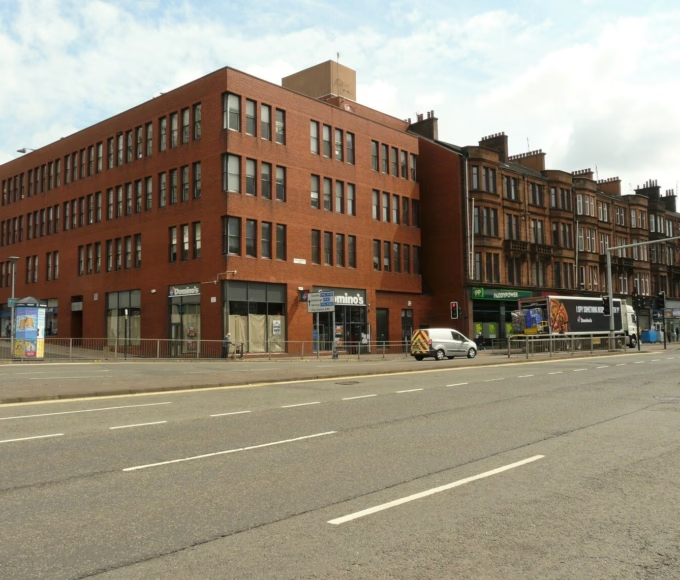
Merchant City is the old merchants’ quarter on the east side of Glasgow’s city centre. Nobody draws the edges in exactly the same place. Roughly, it’s the grid of streets between George Street to the north, High Street to the east, the Trongate to the south and Queen Street to the west, running east from George Square to Glasgow Cross. Visit Glasgow’s page for the area shows the Merchant City sign at Glasgow Cross and says you’ll spot lots of medieval sites in the area, including the 17th-century Tolbooth Steeple.
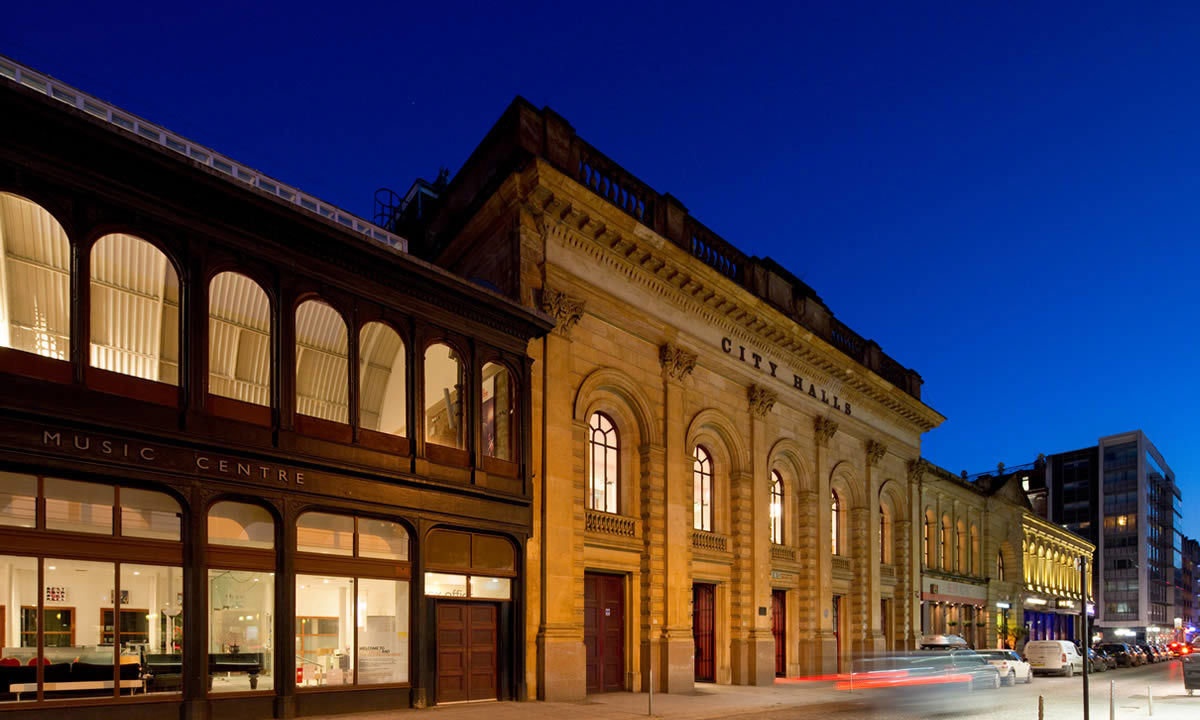
Ingram Street runs through the middle. Candleriggs has the City Halls and Old Fruitmarket, and you’ll find restaurants and pubs on Miller Street, Albion Street, Bell Street, Blackfriars Street and Ingram Street itself. The Trongate, along the south edge, has the Tron Theatre and Trongate 103, an arts building that holds Glasgow Print Studio, Street Level Photoworks and Sharmanka Kinetic Theatre. GoMA sits on the western edge, on Royal Exchange Square.
Most addresses are in the G1 postcode. If you searched for Merchant Street, you’re most likely after Merchant City. It’s one corner of the centre, and the rest, around Buchanan Street and Central station, is in our Glasgow city centre guide.
The streets were laid out in the 1700s. TheGlasgowStory says the town council had a plan drawn up for new streets west of the High Street, and building got going in earnest in the 1780s. Tobacco merchants were among the folk who built and bought here. Glasgow Life says 42 Miller Street went up in 1775 and was bought in 1782 by a tobacco importer, and that Glasgow’s merchants grew their wealth on the backs of slaves in America and the West Indies.
You can still see that era. Hutchesons’ Hall on Ingram Street is Category A listed and dates from 1802 to 1805, and the Trades House on Glassford Street, also Category A, was designed by Robert Adam and dates from 1791 to 1799. GoMA is in a former merchant’s townhouse.
| Merchant City | The short version |
|---|---|
| Where | East side of Glasgow city centre, from George Square to Glasgow Cross |
| Main streets | Ingram Street, Candleriggs, Miller Street, Albion Street, the Trongate |
| Postcode | Mostly G1 |
| Council ward | Mostly Anderston/City/Yorkhill |
| Nearest trains | High Street, Queen Street, Argyle Street, Central |
| Nearest Subway | St Enoch and Buchanan Street, none in Merchant City itself |
| Rent, April to June 2026 | £1,009 a month for a one-bed and £1,297 for a two-bed (G1, Citylets) |
Is Merchant City Safe? What the Figures Show
Merchant City’s reputation is polished and a bit pricey rather than rough. It’s still a city centre with a busy night-time economy, though, and that shows up in the figures.
What the police figures show
Police Scotland publishes recorded crime for every council ward, but it says the figures are provisional and not directly comparable with official statistics, so treat any comparison as a rough guide. Most of Merchant City is in the Anderston/City/Yorkhill ward. As well as Anderston and Yorkhill, it takes in most of the city centre, including George Square, Buchanan Street, Sauchiehall Street and both Central and Queen Street stations.
In 2024-25, the last full year Police Scotland has published for wards, the ward recorded 12,630 crimes (not counting motoring and minor offences). The National Records of Scotland’s mid-2024 estimate puts the ward at about 44,000 residents, so that’s roughly 290 crimes for every 1,000 people, the highest of Glasgow’s 23 wards by a long way. The Scottish Government’s figures for the same year were about 83 per 1,000 for Glasgow City and 55 for Scotland.
The ward has about one in 15 of Glasgow’s residents but recorded about a quarter of its crime. Police Scotland’s figures for April to December 2025 show the same pattern.
Most of what gets recorded is theft, assault and drugs possession. The biggest single types were shoplifting (2,176 crimes), common assault without injury (1,538), other theft (1,440) and drug possession (1,360), and there were another 648 common assaults with injury. Serious assault (122) and robbery (101) are small slices across the whole ward, and 238 bike thefts were recorded.
Why that isn’t the whole story
A count per resident is a harsh way to judge a city centre. Lots of folk shop, work, study and go out here who don’t live here, and the figures count every crime against the people who do. The Scottish Government says the same about town centres in the notes to its deprivation index, SIMD 2020: the resident population can be small compared with the daytime and night-time crowds. It leaves shoplifting out of that index altogether, because it’s aimed at businesses and concentrated in shopping areas.
The ward figures can’t tell you what one street is like, because they cover the whole ward. They don’t say what time of day crimes happen either, so there’s no night-time number to give you.
Some of the wider numbers are more upbeat. Understanding Glasgow, the Glasgow Centre for Population Health’s data site, says a relatively small percentage of people in City Centre and Merchant City live in income or employment deprivation, based on SIMD 2020. And serious assault and robbery together make up under 2% of what’s recorded in the ward.
What helps after dark
Glasgow City Council’s NiteZone page, last updated in September 2024, says taxi marshals work three ranks in the city centre, on Gordon Street, Sauchiehall Street and West George Street, from 11pm to 4am on Friday and Saturday nights. It says the marshals can call the police and the public-space CCTV if there’s trouble, and that Police Scotland puts extra officers in the city centre on weekend evenings.
None of the ranks is in Merchant City itself, and the Subway stops at 11.40pm Monday to Saturday. So sort out how you’re getting home before you go out.
Sensible habits
Police Scotland’s advice for a night out is plain: plan how you’ll get home, keep your phone charged, stay with people you know and look after your bags and valuables. If you keep a bike here, lock it properly. Don’t leave anything on show in a parked car either.
What’s Merchant City Like by Day and at Night?
By day it’s galleries, cafes and shops in handsome old buildings. GoMA opens at 10am (11am on Fridays and Sundays), Café Gandolfi on Albion Street opens at 8am most days, and Visit Glasgow lists a run of designer shops on Ingram Street. It stays busy into the evening, when the bars and restaurants take over.
CAMRA lists Babbity Bowster as open noon to midnight every day. Mharsanta is open until 11pm Sunday to Thursday and midnight on Fridays and Saturdays, and the Corinthian Club’s nightclub stays open until 3am every weekend. Visit Glasgow also lists the area’s LGBTQ+ scene among the things locals love. Friday and Saturday are the loud nights, so if you’re looking at a flat, go back on a weekend evening before you sign.
The Merchant City Festival is the big event of the year. Glasgow Life says the 2026 festival ran from 24 July to 2 August, with hubs at Candleriggs Square, The Briggait and Merchant Square. It hasn’t announced dates for 2027 yet.
Who Is Merchant City For?
A lot of young adults, going by the numbers. Understanding Glasgow’s profile for City Centre and Merchant City covers a bigger patch than Merchant City alone, with 24,556 people. Its young people’s profile says 18 to 24-year-olds make up 44% of the population and under-18s only 6%. The University of Strathclyde says on its own site that its campus is five minutes from George Square, so that’s no surprise.
It suits folk who want to walk to work, eat out a lot and manage without a car. It suits families less. As far as we can tell there’s no school inside the area, and the nine flats Citylets listed for it when we looked were all one-beds and two-beds.
Rent and House Prices in Merchant City
Merchant City costs a bit more than the Glasgow average. Citylets, which tracks rents advertised on its site, put the average one-bed in the G1 postcode at £1,009 a month for April to June 2026 and the average two-bed at £1,297. G1 covers much of the city centre, including most of Merchant City, so it’s a close guide rather than an exact one. The Glasgow averages were £912 and £1,211, so G1 came out about £97 a month dearer for a one-bed and about £86 for a two-bed.
| Area | 1 bed (per month) | 2 bed (per month) |
|---|---|---|
| City centre (G1), including Merchant City | £1,009 | £1,297 |
| Finnieston and Kelvingrove (G3) | £965 | £1,321 |
| Hillhead, Hyndland and Kelvinside (G12) | £1,005 | £1,446 |
| Dennistoun (G31) | £836 | £1,066 |
| Glasgow average | £912 | £1,211 |
Source: Citylets Quarterly Report, Q2 2026.
Asking rents are in the same range. When we looked in late October 2026, Citylets listed nine flats under Merchant City: five one-beds from £875 to £1,195 a month and four two-beds from £1,195 to £1,495. Those are asking rents, so what folk end up paying can differ, and the list changes daily. Our guide to renting in Glasgow covers deposits and your rights as a tenant.
If you’re buying, the latest Scottish Government small-area figures we could find are for 2023 and cover an area called City Centre East, which is a wider patch than Merchant City. It had 128 sales, with a middle price of £166,084 and the middle half of sales between £139,500 and £216,500. The middle price across Glasgow that year was £173,000.
Rightmove’s sold prices for Merchant City, which use Registers of Scotland data up to 31 August 2026, give an average of £185,022 over the last year, or £182,244 for flats. The UK House Price Index puts the City of Glasgow average at £194,382 for August 2026. Look at what similar flats in the same building have sold for before you set a budget.
Where to Eat and Drink in Merchant City
Visit Glasgow says many of the area’s restaurants are set in former grand courts and banks. These eight are open now, checked in October 2026. Hours and prices come from each place’s own website unless it says otherwise, so they can change.
- Café Gandolfi (64 Albion Street) has been going since 1979, according to its own site, which calls it one of Glasgow’s oldest family-run restaurants. It opens at 8am Monday to Saturday (9am on Sundays), closes at 3pm on Mondays and Sundays, and stays open until 10pm Tuesday to Thursday and 11pm on Fridays and Saturdays. There’s a bar upstairs for wine and cocktails in the evening, and it takes card details for every booking.
- Paesano (94 Miller Street) does Neapolitan pizza, with prices from £8.50 to £13.90 on its main menu. It doesn’t take bookings: its site says it’s a walk-in service and the staff will seat you as soon as they can.
- The Spanish Butcher (80 Miller Street) is a steakhouse built around Galician beef, with Spanish and Mediterranean flavours and Scottish seafood on the menu. You can book through its website.
- Swadish by Ajay Kumar (33 Ingram Street) is a seafood-focused Indian restaurant. Time Out reported on 22 September 2026 that it won the AA’s award for the best restaurant in Scotland. Its website lists opening hours from Wednesday to Sunday, and you book through the site.
- Mharsanta (26 Bell Street) does Scottish cooking with local produce. It opens at noon, closes at 11pm Sunday to Thursday and midnight on Fridays and Saturdays, and the Sunday roast beef starts at £19.95.
- Santa Lucia (68 Ingram Street) is an Italian restaurant with online booking, though groups of seven or more can’t book online and need to contact the restaurant.
- Babbity Bowster (16 to 18 Blackfriars Street) is a pub with rooms, open noon to midnight every day. CAMRA’s listing, last surveyed on 4 February 2026, has three changing cask beers, food until 9pm and lively traditional music on Wednesday and Saturday afternoons.
- The Corinthian Club (191 Ingram Street) is a big bar, brasserie and club in the old city courts building. It has Teller’s Bar & Brasserie, a piano bar and a rooftop terrace, and its nightclub is open until 3am every weekend.
If you only try one, go to Paesano for a quick pizza, Swadish for a special night or Babbity Bowster for a pint.
Things to Do in Merchant City
Gallery of Modern Art (GoMA) on Royal Exchange Square is home to the city’s contemporary art collection, and entry is free, though donations are welcome. It’s open 10am to 5pm, or 11am to 5pm on Fridays and Sundays. VisitScotland says the Duke of Wellington statue outside is “typically sporting the customary traffic cone atop his head”.

The City Halls on Candleriggs is Glasgow’s oldest purpose-built concert hall, according to Glasgow Life, which says audiences first heard performances there in 1841. It’s home to the BBC Scottish Symphony Orchestra, and it’s only open to the public during events. The Old Fruitmarket next door began as Glasgow’s wholesale fruit market and now hosts gigs, comedy and club nights, so check what’s on at both before you go.
Trongate 103 is an arts building on the Trongate. Glasgow Print Studio, founded in 1972, is based there, along with Street Level Photoworks and Sharmanka Kinetic Theatre. Sharmanka was founded by the sculptor-mechanic Eduard Bersudsky and the theatre director Tatyana Jakovskaya, and it puts on 45-minute shows that you book through its website. Check each website for opening hours.
The Tron Theatre at 63 Trongate has a box office, a café and bar and a programme of shows. Its website lists The Snaw Queen from 18 November to 31 December 2026.
The Britannia Panopticon at 113 to 117 Trongate describes itself as the world’s oldest surviving music hall. It’s only open for shows and events at the moment, and its tours and open days return at Easter 2027.
Glasgow Cathedral is about a 15-minute walk east. Historic Environment Scotland calls it Scotland’s finest surviving medieval cathedral and says entry is free, though donations are welcome, and opening hours can change because of services and events. The Necropolis, the Victorian cemetery just behind it, overlooks the city, and VisitScotland lists free tours with the Friends of Glasgow Necropolis, with donations appreciated.

Getting Around: Trains, Subway and Buses
You genuinely don’t need a car here. Most stations are within about 15 minutes’ walk of the City Halls, which is close to the middle of the area.
| Station | Walk from the City Halls | Good to know |
|---|---|---|
| High Street (trains) | About 5 minutes | ScotRail runs it. National Rail lists no step-free access to the platforms and no car park. |
| Queen Street (trains) | About 12 minutes, or 9 from Hutchesons’ Hall | ScotRail, with step-free access to all platforms. Visit Glasgow says it mostly serves Edinburgh and the north. |
| Glasgow Central (trains) | About 15 minutes | Step-free access to all platforms. Visit Glasgow says it links Glasgow to the south of the UK. |
| St Enoch (Subway) | About 11 minutes, or 8 from Trongate 103 | The nearer of the two Subway stations to the Trongate end. |
| Buchanan Street (Subway) | About 13 minutes | SPT lists Queen Street station and Buchanan Bus Station as nearby. |
| Buchanan Bus Station | About 17 minutes | SPT lists it as open 24 hours, with the concourse open 6am to 11pm. Citylink, Megabus, National Express and FlixBus are among its operators. |
Walking times are OpenStreetMap routes at a normal pace.
Argyle Street station is handy for the Trongate end. Sharmanka says it’s five minutes’ walk from Trongate 103, and National Rail lists no step-free access to its platforms.
There’s no Subway station in Merchant City itself. The Subway has 15 stations, and SPT says it’s open 6.30am to 11.40pm Monday to Saturday and 10am to 6.12pm on Sundays, with trains every four minutes at peak times and a full circuit taking 24 minutes. Our Glasgow Subway guide has the fares and the full route.
First Glasgow runs buses towards Glasgow Cross from the city centre, including the 2, 18, 60 and 61, so check First Bus for current routes and times. Long-distance coaches use Buchanan Bus Station.
Parking and Driving
Parking is the weak spot. Merchant City is inside Glasgow’s Low Emission Zone, which covers the city centre between the M8, the River Clyde and Saltmarket/High Street and applies 24 hours a day. The council says diesel cars registered after September 2015 and petrol cars from 2006 on generally meet the standard, electric cars comply and motorcycles are exempt.
If you live here with a car, you’ll probably need a resident permit for your parking zone, and the council’s zone permits page says you can use its interactive parking map to find yours. The council’s permit fees page, last updated in August 2025, lists annual permits from £80 to £220 depending on the car’s CO2 emissions, with an extra £125 for a second permit at the same address.
The council also says anyone buying or renting a home in a building finished or redeveloped after its zone’s qualifying date can’t get a resident permit, so ask the agent or landlord before you sign. Our guide to Glasgow parking permits explains how the zones work.
The Q-Park at Candleriggs (37 Albion Street) has 365 spaces and is open from 6am to 11.59pm every day, with a 2.1 metre height limit. Q-Park doesn’t publish its prices online, so check the charge when you arrive.
The honest advice? Don’t bring a car if you can help it. Everything you need is walkable, and the stations and bus station are all within about 17 minutes’ walk.
Schools and Families
Merchant City isn’t really a family area. As far as we can tell there’s no primary school inside it, and under-18s make up only 6% of the population in Understanding Glasgow’s profile. Which school your child gets depends on your address, so check with Glasgow City Council before you rent or buy.
St Mungo’s Primary and Nursery Class, a Roman Catholic school on Parson Street in Townhead, is one of the schools in the wider area, about a 16-minute walk from the City Halls. For nurseries, childminders and out of school care, Glasgow Families Information Services, which the council runs, has a search tool.
If you’ve got children, it’s worth looking at Dennistoun too, where rents are lower. Citylets put the average one-bed in its G31 postcode at £836 a month and the average two-bed at £1,066 for April to June 2026. Our Dennistoun guide has the details.
Is Merchant City a Good Place to Live? The Verdict
Merchant City is a good fit if you want to walk to restaurants, galleries and stations, you don’t need a car and you can live with city-centre noise and prices. It’s less good if you want space, a quiet Saturday night or a parking spot at the door.
The good
- Old buildings, GoMA and the Tron Theatre on your doorstep.
- Trains, the Subway and the bus station all within about 17 minutes’ walk.
- Places to eat and drink open from 8am to midnight, and later at weekends.
The not so good
- Rents above the Glasgow average.
- Noise on Friday and Saturday nights.
- Parking, and the Low Emission Zone if you drive.
- Few family homes and no school inside the area.
On safety, treat Merchant City like the rest of the city centre and use the same habits. The figures are higher than elsewhere in Glasgow, but they cover a whole ward of shops, stations and bars, and they don’t say what any one street is like. Weighing it up against other areas? Our guide to the best areas to live in Glasgow compares them by budget.
Merchant City FAQs
Is Merchant City safe at night?
Police Scotland’s ward figures don’t say what time of day crimes happen, so there’s no night-time number to quote. The area stays busy until late. The council says it runs taxi marshals in the city centre on Friday and Saturday nights and that Police Scotland puts extra officers there on weekend evenings. Stay with people you know, keep your phone and bag out of sight and plan how you’re getting home.
Is the Trongate safe?
The Trongate is the main road along the south edge of Merchant City, with the Tron Theatre, Trongate 103 and the Britannia Panopticon on it. The police figures we have cover the whole ward, not single streets, so there’s no figure to give you for it. The advice is the same as anywhere in the city centre: keep your phone and bag out of sight and plan how you’re getting home.
Is Merchant City a good place to live?
For plenty of folk, yes. You can walk to restaurants, galleries and stations and manage without a car. The trade-offs are rents above the Glasgow average, weekend noise, parking and few family homes.
How much is rent in Merchant City?
Citylets’ average for the G1 postcode in April to June 2026 was £1,009 a month for a one-bed and £1,297 for a two-bed. In late October 2026 the flats Citylets listed under Merchant City were asking £875 to £1,195 for a one-bed and £1,195 to £1,495 for a two-bed.
Is there a Subway station in Merchant City?
No. The nearest are St Enoch and Buchanan Street, about 11 and 13 minutes’ walk from the City Halls.
What is Merchant City known for?
It’s known for its old merchants’ buildings, restaurants and bars in former courts and banks, the galleries at Trongate 103, GoMA on its western edge and the Merchant City Festival.
Written by Lewis McGuire. Last updated October 2026.