


Glasgow Subway Guide: Map, Prices, Times and Tips
Glasgow’s Subway is one of the simplest public transport systems you’ll ever use. It’s a single loop with 15 stations. Two circles going in opposite directions. You literally can’t get lost. Get on, go round, get off. That’s it.
Locals call it the Clockwork Orange, on account of the bright orange trains that’ve been rattling round since the 1980s. It opened back in 1896, making it the third oldest underground railway in the world after London and Budapest. The Victorians built it and it still works. Can’t say that about many things.
How the Subway Works
There’s one circular route. 15 stations. Two directions: the Outer Circle goes clockwise and the Inner Circle goes anticlockwise. Every train stops at every station. You pick which direction gets you to your stop faster, hop on, and that’s your lot.
The full loop takes about 24 minutes. So even if you go the wrong way, you’ll still get where you’re going in under half an hour. Some folk just stay on and ride the whole circle. Nobody’s judging.
Eight stations sit north of the River Clyde, seven to the south. The system covers the city centre and West End well, but doesn’t reach the East End or Southside beyond Cessnock and Govan. That’s the trade-off with a tiny circle.
All 15 Stations
Starting from Buchanan Street and going clockwise on the Outer Circle: Buchanan Street, Cowcaddens, St George’s Cross, Kelvinbridge, Hillhead, Kelvinhall, Partick, Govan, Ibrox, Cessnock, Kinning Park, Shields Road, West Street, Bridge Street, St Enoch. Then you’re back at Buchanan Street.
Which Station Do You Need?
Here’s the quick breakdown of what each station is handy for.
- Buchanan Street is the big one. Right in the city centre, connected to Buchanan Galleries shopping centre and a short walk from Queen Street train station. If you’re shopping or heading into town, this is your stop.
- St Enoch puts you at St Enoch Square, next to the shopping centre and Argyle Street. Good for the Style Mile and the Merchant City.
- Hillhead drops you at the top of Byres Road in the West End. Great for restaurants, pubs, the Botanic Gardens, and Glasgow University.
- Kelvinbridge is handy for Great Western Road, the north end of the West End, and Kelvingrove Park.
- Kelvinhall gets you to Kelvingrove Art Gallery and Museum. One of the best free museums in the UK and well worth the trip.
- Partick connects to Partick train station, so you can switch to ScotRail from here. Useful if you’re heading to Dumbarton, Helensburgh, or further afield.
- Govan serves the south side near the Clyde. The Riverside Museum and Tall Ship are a short walk away.
- Ibrox is for Rangers matches at Ibrox Stadium. On match days it’s heaving, so plan ahead.
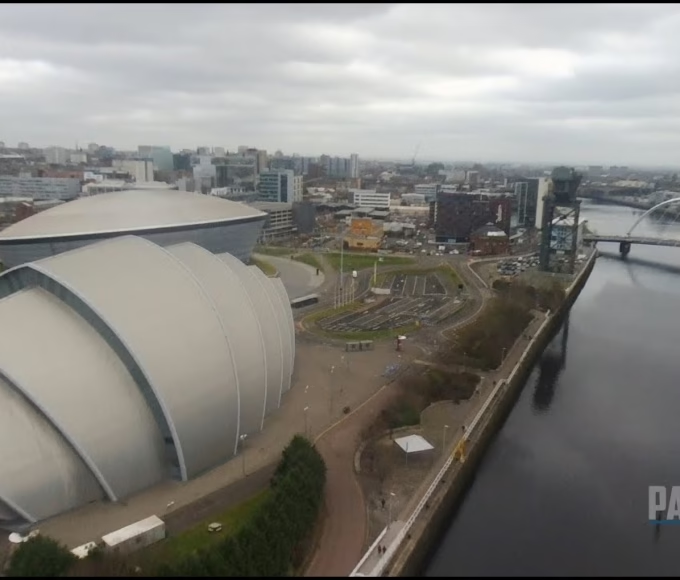
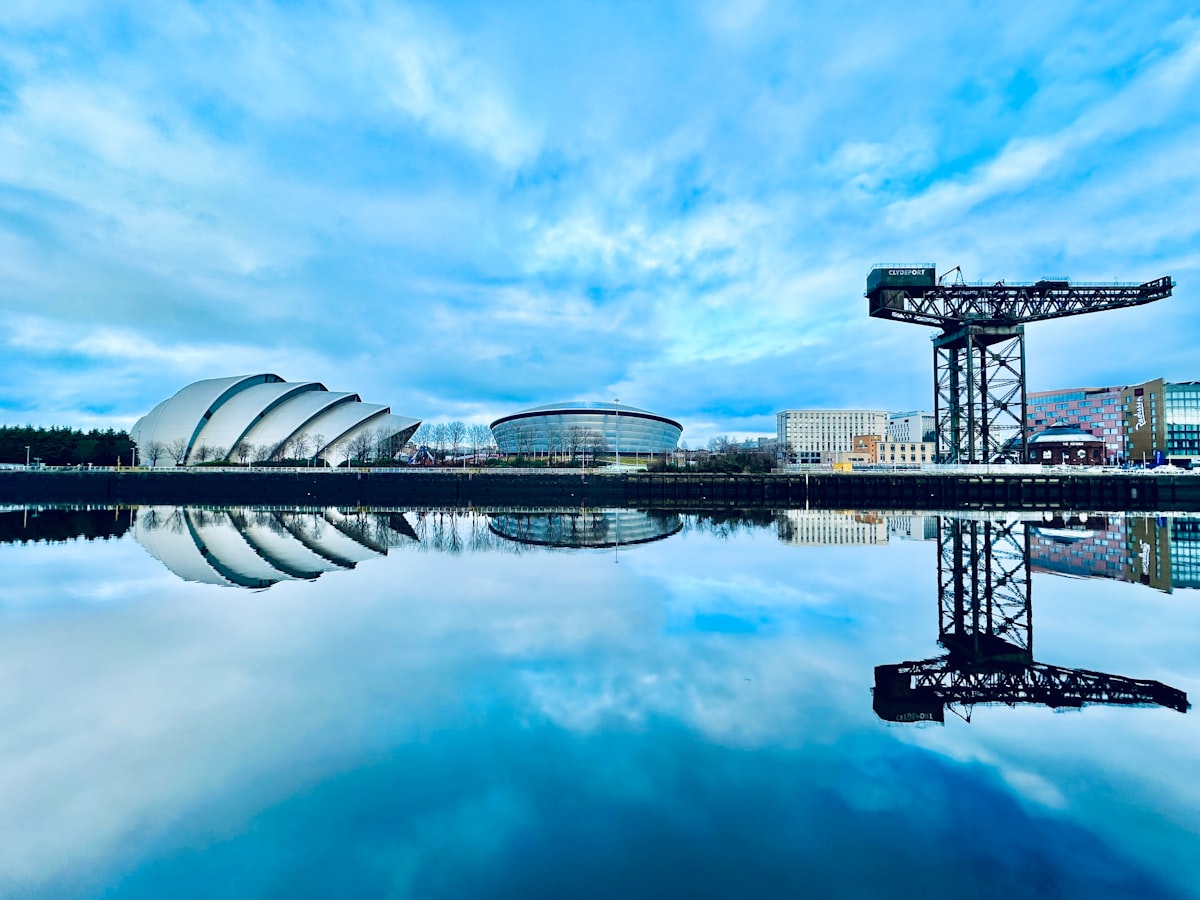
- Cessnock is handy for the SEC (Scottish Event Campus), OVO Hydro, and the Clyde Auditorium. A 10 minute walk over the Clyde Expressway footbridge.
- Cowcaddens puts you near the top of Sauchiehall Street and Theatre Royal.
Fares and Tickets (2026 Prices)
Subway fares changed on 5 January 2026. Here’s what you’re paying now.
- Adult single (smartcard): £1.80
- Adult single (disposable ticket): £1.85
- Adult day ticket (smartcard): £3.40
- Adult day ticket (disposable): £4.45
- Weekly pass (online): £14.50
- Weekly pass (in station): £15.50
- 28-day pass (online): £55.00
- 28-day pass (in station): £60.00
Kids’ fares are cheaper. If you use the Subway regularly, get a smartcard. You’ll save on every trip and it speeds things up at the barriers. You can buy one at any station or order it from the SPT website.
The day ticket is the best deal for visitors. Unlimited travel all day for £3.40 on a smartcard. You’d pay that for two singles, so if you’re doing a return trip it’s worth getting the day pass.
Opening Hours and Frequency
Monday to Saturday: 06:30 to 23:40
Sunday: 10:00 to 18:12
Sunday hours are shorter, which catches some folk out. If you’re heading somewhere on a Sunday evening, don’t rely on the Subway. Check bus or taxi options instead.
At peak times, trains come every 4 minutes. Off-peak, it’s every 6 to 8 minutes. You’re never waiting long. There’s no timetable to memorise because the frequency is high enough that you just show up and get on.
SPT has confirmed that when the current modernisation work finishes (expected sometime in 2027), they’ll extend hours. Friday and Saturday services will run until 00:30, and Sunday trains will run 06:30 to 23:30. That’ll be a massive improvement for nights out.
How to Use It
If you’ve never used the Glasgow Subway before, here’s the step-by-step.
1. Buy your ticket. You can use a smartcard (tap it on the reader), buy a disposable ticket from the machines at every station, or pay contactless with your bank card at most stations. The machines take card and cash.
2. Go through the barriers. Tap your card or insert your ticket. Walk through. Same as any other metro system.
3. Pick your direction. Signs will say Inner Circle or Outer Circle. Check which way gets you to your station faster. If in doubt, just pick one. You’ll get there either way. The full loop is 24 minutes, so even the “wrong” way is under 15 minutes to any station.
4. Get on the train. They’re small. Properly small. The tunnels were built in 1896 and they’re tiny by modern standards. Don’t be surprised. The carriages are clean and there’s enough room, but if you’re tall you might want to duck slightly getting on.
5. Get off. Listen for your stop or watch the electronic display. The doors open, you step out, go through the barriers, and you’re done.
Tips for Getting the Most Out of It
You can’t get lost. This is the biggest selling point. It’s a circle. If you miss your stop, just stay on and you’ll come back round. If you get on the wrong direction, you’ll still arrive. Relax.
Avoid it during Rangers or Celtic home games if you’re not going to the match. Ibrox station gets absolutely rammed on match days. The whole system gets busier.
The Sunday hours are rubbish. 10am to 6pm is not enough, especially in a city where Sunday brunch culture is massive. Plan around it.
Use it with other transport. The Subway connects to ScotRail at Buchanan Street (for Queen Street station, a 5 min walk) and Partick (Partick train station). St Enoch is a short walk from Glasgow Central. You can combine Subway and train to get pretty much anywhere in the central belt.
The Sub Crawl is a real thing. Getting off at every station and having a pint at a pub near each one is a Glasgow tradition. Fifteen stations, fifteen pints. Most folk don’t make all fifteen. It’s worth looking up the Glasgow Sub Crawl website if you fancy giving it a go.
A Wee Bit of History
The Glasgow District Subway opened on 14 December 1896. It was cable-hauled at first, with a big winding engine at Scotland Street pulling the trains around the loop. It was the first system in the world to actually call itself a “subway.” London had the Underground. Budapest had the Metro. Glasgow went its own way. As usual.
It ran on cables until 1935 when they electrified the whole thing. The orange carriages arrived in 1979 as part of a major refurbishment, and that’s when folk started calling it the Clockwork Orange. The name stuck.
The system hasn’t changed much since 1896. Same 15 stations. Same circular route. Same 6.5 mile loop. They’ve modernised the stations and are currently replacing the rolling stock, but the basic system is the one the Victorians built. It just works.
One quirky fact: the Glasgow Subway is the only underground system in the UK outside London. It’s also one of the smallest in the world. But for getting around the city centre and West End, it does exactly what it needs to do.
What the Subway Doesn’t Cover
Let’s be honest about the limitations. The Subway only covers a small part of Glasgow. It’s great for the city centre, West End, and parts of the south side near the river. But it doesn’t go to:
- The East End (Glasgow Green, Barras, the Barrowlands)
- The Southside beyond Cessnock/Govan (Shawlands, Mount Florida, Pollokshields)
- Glasgow Airport
- Any of the train stations except via a short walk from Buchanan Street, St Enoch, and Partick
For those areas you’ll need buses, trains, or a taxi. The Subway is brilliant at what it does, but it’s a small loop, not a full metro network. Don’t expect it to take you everywhere. If you’re deciding where to live based on transport links, our best areas to live in Glasgow guide covers connections for each area.
For full timetables, route maps, and to order a smartcard, check the SPT Subway page.