

Hillhead is the part of Glasgow’s West End around Byres Road, Ashton Lane and the University of Glasgow, mostly in the G12 postcode. It has its own Subway station, the Botanic Gardens at the top of the road, and streets of sandstone tenements full of students and young professionals. Rents run above the Glasgow average, and police figures for the Hillhead ward put recorded crime about level with Glasgow’s, with shop theft the biggest single type. If you can afford it and don’t mind a lively Friday night, it’s one of the best places in the city to live.
Last checked: 25 October 2026.
Where Is Hillhead?
Hillhead is in the middle of Glasgow’s West End, just over two miles from Buchanan Street on foot or four stops on the Subway. The heart of it is Byres Road, the long main street, and Ashton Lane, the cobbled lane of bars and restaurants beside Hillhead Subway station. The University of Glasgow’s campus is on the south side, Great Western Road runs along the north with the Botanic Gardens beyond it, and Kelvingrove Park is about 15 minutes’ walk south.
The edges are loose. Hillhead is also a council ward, and the Subway station, Ashton Lane and the University all have postcodes in it. But the Scottish Government’s statistical maps put the station in an area called Dowanhill and the University in one called Kelvingrove and University. Go by the landmarks, not a line on a map.
How Hillhead Fits Into the West End
The West End doesn’t have official borders either. Folk use it for the part of Glasgow around Byres Road and Great Western Road, with Hillhead at the centre. Kelvinbridge is one Subway stop east and Partick is two stops west, via Kelvinhall. Hyndland, a more residential area, is a 15 to 20 minute walk west.
What’s Hillhead Like?
By day, Byres Road is a proper high street, with independent shops, charity shops, cafes and supermarkets, according to the University of Glasgow’s own guide for students. The side streets are quieter, with blonde sandstone tenements, bay windows and tree-lined roads.
At night it moves to Ashton Lane, with its pubs, bars, restaurants and a cinema. Brel is open until late every day, and the Ubiquitous Chip’s brasserie and Hillhead Bookclub stay open until midnight. The Subway shuts at 11.40pm Monday to Saturday and just after 6pm on Sundays, so sort out how you’re getting home.
Term time is the busy time. When the students go home for the summer, it calms down a bit. The vibe is bookish, cultural and a wee bit smug about it. If Edinburgh is Scotland’s head, Glasgow is its heart, and Hillhead thinks it’s both.

Who Lives in Hillhead?
A young crowd, going by the numbers. Understanding Glasgow, developed by the Glasgow Centre for Population Health with partners including Glasgow City Council, has a profile for Hillhead and Woodlands together based on the 2022 census. It covers 22,834 people, a bigger patch than Hillhead alone.
Its young people’s profile says 30% of residents are aged 18 to 24, higher than the Glasgow average, and 56% of under-25s live in privately rented or rent-free homes. More than a quarter of residents are from a minority ethnic background. Income and employment deprivation are both particularly low compared with the Glasgow average, which fits the delis.
Rent and Property in Hillhead
Hillhead is dearer to rent than the Glasgow average. Citylets’ Glasgow report for the second quarter of 2026 puts the city average at £912 a month for a one-bed and £1,211 for a two-bed. The asking rents on Citylets’ Hillhead listings were higher when we looked on 24 October 2026: flats in “Hillhead & nearby areas” averaged £1,053 for a one-bed and £1,392 for a two-bed.
That’s about £140 and £180 a month more. The figures aren’t measured the same way, one being a quarterly average and the other current asking rents, but they point the same direction. Be ready to move quickly: Citylets says 18% of one-beds in Glasgow were let within a week that quarter and 63% within a month. Our guide to renting in Glasgow covers costs, deposits and your rights.
Buying is competitive too. ESPC’s Hillhead page shows the wider Glasgow West area, because of data availability. In the six months to 30 September 2026, homes sold through ESPC there averaged £188,259, took a median of 20 days to sell and went for 106.9% of the Home Report valuation.
The UK House Price Index has Glasgow’s average at £194,382 for August 2026. We couldn’t find a published sale price for Hillhead itself, so check recent sold prices on your street before you make an offer.
Is Hillhead Safe?
Hillhead has a good name, and mostly it’s earned. It’s busy from the morning until well after dark, so there are nearly always folk about. The late-night crowd is part of the deal, though. Ashton Lane is busy and loud at weekends, so if you’re looking at a flat right on the lane, go and see it on a Friday or Saturday night first.
Police Scotland publishes recorded crime for every council ward, but it says the figures are provisional and not directly comparable with official statistics, so treat any comparison as a rough guide. The Hillhead ward covers the University of Glasgow, Hillhead Subway station on Byres Road, Ashton Lane and Kelvingrove Art Gallery. The Botanic Gardens and Hyndland are in the next ward, Partick East/Kelvindale.
In 2024-25, the last full year Police Scotland has published for wards, the Hillhead ward recorded 2,128 crimes (not counting motoring and minor offences) for about 25,900 residents (the National Records of Scotland mid-2024 estimate). That’s roughly 82 crimes for every 1,000 people. Worked out the same way, Glasgow City comes to about 81 and Scotland about 54. So Hillhead is about level with the Glasgow average and above the Scottish one. Among Glasgow’s 23 wards it’s sixth highest, a long way behind the city centre ward at about 290.
A lot of what gets recorded is theft. Shoplifting is the biggest single type at 577 crimes, more than a quarter of the total, followed by other theft (211), vandalism (184) and common assault without injury (154). Serious violence is a small slice: 9 serious assaults and 11 robberies across the whole ward. Leave shoplifting out, as the deprivation index does, and the ward comes to about 60 per 1,000, below Glasgow’s 69 and above Scotland’s 46.
| Area | Recorded crimes, 2024-25 | Per 1,000 residents |
|---|---|---|
| Hillhead ward | 2,128 | 82 |
| Partick East/Kelvindale ward | 1,670 | 54 |
| Glasgow City | 52,406 | 81 |
| Scotland | 299,111 | 54 |
Treat that as a guide, not a verdict. Crimes are counted where they happen and divided by the people who live there. Hillhead’s ward has a university, a Subway station, Byres Road’s shops and a lane full of pubs, so lots of folk spend their day or night here without living here. Any shoplifting or bike theft that happens here lands in the ward’s total, but the visitors don’t count as residents. The Scottish Government says the same about busy places in the notes to its deprivation index: town centres and other busy places with few residents can look worse. The ward figures can’t tell you what one street is like, and they don’t say what time of day crimes happen, so there’s no night-time number to give you.
The older numbers tell a milder story. The Scottish Government’s deprivation index (SIMD 2020, and 2020v2 was still the latest edition when we checked on 25 October 2026) counts police-recorded violence, sexual offences, housebreaking at homes, vandalism, drug offences and common assault, but not things like shoplifting, fraud or bike theft. The records are Police Scotland’s for 2017-18, so they’re getting on a bit. The Scottish Government said in November 2024 that it expected a new edition in the latter part of 2026, and we couldn’t find it published yet.
The three statistical areas around Byres Road, Ashton Lane and the University have 19 small areas between them. Together they recorded about 299 crimes per 10,000 residents. Glasgow as a whole is about 439 and Scotland about 287, so the area is well below the city average and close to the Scottish one. Sixteen of the 19 small areas came out below the Glasgow figure and three came out above it.
| Area | Recorded crimes per 10,000 residents, 2017-18 |
|---|---|
| Around Byres Road and the University (3 statistical areas, 19 small areas) | 299 |
| The wider West End (13 statistical areas, 77 small areas) | 252 |
| Glasgow (746 small areas) | 439 |
| Scotland (6,976 small areas) | 287 |
The small areas in that index hold roughly 500 to 1,500 residents each, so a few incidents can move the number. It’s also seven years older, covers a smaller patch and leaves out shoplifting, which is the biggest type in the ward figures, so the two sets of numbers aren’t really in conflict.
A bit of common sense goes a long way. Lock your bike with a proper D-lock: the University’s security team said in 2016 that bike theft was the most common incident it faced, while overall crime on campus stayed “pretty low”. Keep nothing on show in your car, and plan your way home late at night.
Is the West End Safe?
There’s no official West End boundary, so we picked 13 statistical areas to stand in for it, including Finnieston, Partick, Hyndland, Kelvindale and Anniesland East. Together they recorded about 252 crimes per 10,000 residents in 2017-18, below the Scottish figure and well below Glasgow’s. The quieter, more residential areas come out lowest, such as Kelvindale at about 139 and Partickhill and Hyndland at about 187. That doesn’t mean there’s no crime, but on the 2017-18 numbers the West End does better than the city as a whole.
The newer police figures point the same way for the quieter side. The Partick East/Kelvindale ward, which takes in Hyndland, Kelvindale, the Botanic Gardens and the middle of Partick, recorded 1,670 crimes in 2024-25 for about 31,000 residents, roughly 54 per 1,000. That’s level with Scotland, well below Glasgow City’s 81, and ninth lowest of Glasgow’s 23 wards. Hillhead, the busiest part of the West End, is the higher one.
Best Places to Eat and Drink in Hillhead
Ashton Lane is the headline act, with Byres Road and the streets around it not far behind. Prices below are from each place’s own website in October 2026.

- Ubiquitous Chip (12 Ashton Lane) has been going since 1971, according to its own website. The restaurant has a koi pond under a glass roof, with plenty of greenery. The tasting menu is £95 and à la carte mains are £30 to £40, with a set lunch from Wednesday to Friday at £30 for two courses or £35 for three. The Upstairs Brasserie is cheaper, with plates at £6 to £15 and bigger dishes at £22 to £35. If you only go to one restaurant in the West End, this is probably the one.
- Brel (37 to 43 Ashton Lane) is a Belgian bar and restaurant with a beer garden, open from noon until late every day. Most mains are £13.50 to £23 and steak frites is £32.50. Moules Monday gets you moules frites from £14, and on Fondue Tuesday from 5pm a fondue or raclette for two starts at £31. The garden is magic on a summer evening.
- Ramen Dayo (31 Ashton Lane) has been on the lane since 2018, going by its own history page. Ramen bowls are £12.90 to £13.90, or £17.50 for the Deluxe, and it’s open from noon to 10pm every day. Quick, filling and fairly priced for the area.
- Ashoka Ashton Lane (19 Ashton Lane) is a curry house that has been on the lane for years. It’s popular, and it’s the kind of place you end up in without planning to.
- Hillhead Bookclub (17 Vinicombe Street) opened in 2010 and is open until midnight every day. There’s brunch from Friday to Sunday, the 3 to 5pm happy hour gets you any main meal for £12, and there are student deals too.
- Cail Bruich (725 Great Western Road) is the Michelin-starred one, at the Byres Road end of Great Western Road. It serves tasting menus, at £140 for dinner from Tuesday to Saturday, with a shorter lunch at £100 on Fridays and Saturdays. Book well ahead.
Transport Links
Hillhead Subway Station
Hillhead Subway station is at 248 Byres Road (G12 8SH). On the Subway’s 15-station loop, Buchanan Street is four stops away, via Kelvinbridge, St George’s Cross and Cowcaddens, which is roughly seven minutes going by SPT’s 24-minute lap. Kelvinhall, for Kelvingrove museum, is one stop the other way.
A single costs £1.80 on contactless or smartcard and an all-day ticket is £3.40, according to SPT. Trains run from 6.30am to 11.40pm Monday to Saturday and from 10am to just after 6pm on Sundays, every four minutes at peak and every six to eight minutes otherwise. Our Glasgow Subway guide has the full lowdown.
The ticket hall is step-free from Byres Road, but SPT’s access guide says there’s no lift to the platforms, only stairs and escalators.
Trains
There’s no railway station in Hillhead. The nearest ScotRail stations are Hyndland (Queensborough Gardens), 1.3 km away on foot, and Partick (Merkland Court), 1.4 km, so 15 to 20 minutes’ walk either way. National Rail lists step-free access to every platform at both Hyndland and Partick. Partick is the better connected: it’s two Subway stops away, and SPT says Argyle line trains leave from the same building, with the bus station out front.
Buses and Walking
First’s 4 and 4A link the Southside, the city centre, the University and Broomhill, and the 6 and 6A run along Great Western Road between the city centre and Anniesland. On foot, the University is about 10 minutes from the Subway station and Kelvingrove Art Gallery about 15. Buchanan Street is 3.4 km away, around 40 to 45 minutes on foot, so the Subway makes more sense. You don’t need a car for day-to-day life here.
Things to Do
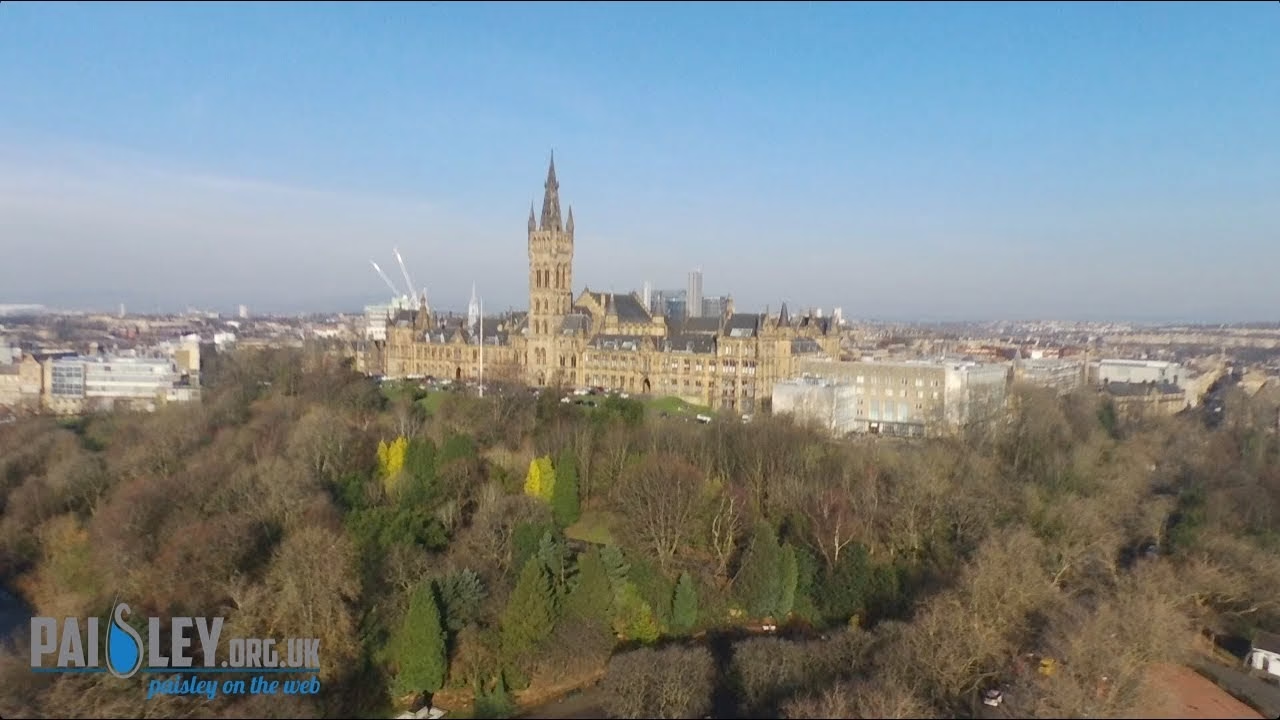
The University of Glasgow is worth a look even if you’re not a student. It moved to Gilmorehill in 1870, into the Gothic main building known as the Gilbert Scott Building, and it still looks like something out of Harry Potter. The Hunterian Museum, in the same building, and the Hunterian Art Gallery are free and open Tuesday to Sunday, 10am to 5pm. Student guides run campus tours at 2pm, Tuesday to Sunday.
The Glasgow Botanic Gardens are at the top of Byres Road, about seven minutes’ walk from the Subway. Entry is free and the grounds are open from 7am until dusk all year. The glasshouses open from 10am to 6pm (4.15pm in winter), and the Kibble Palace, a Category A listed glasshouse that started life beside Loch Long, is the showpiece.
Kelvingrove Park and Kelvingrove Art Gallery and Museum are about 15 minutes’ walk south. The gallery is free, open 10am to 5pm (11am on Fridays and Sundays), with a Spitfire hanging in the west court and Dalí’s Christ of St John of the Cross on the ground floor. Some areas are scaffolded during restoration work, but Glasgow Life says it’s staying open. The park’s bandstand hosts live shows in summer.
Òran Mór at the top of Byres Road is a converted church, founded in 1862 as the Kelvinside Free Church, that reopened as an arts and events venue in 2004. It hosts gigs, comedy and theatre, including A Play, A Pie and A Pint, a lunchtime show with a new play every week and food and drink in the ticket price. The Auditorium has a ceiling mural by Alasdair Gray.
For the pictures, the Grosvenor Picture Theatre on Ashton Lane is a boutique cinema with comfy seats, according to Visit Glasgow, and shows new releases and classics. There’s a cafe in the same building, and ticket holders get 20% off its à la carte menu.
Schools and Families
Hillhead isn’t mainly a family area, but families do live here. Space is the problem: the most popular home sold in Glasgow West is a two-bed flat, according to ESPC, so a bigger place with a garden takes more finding. If you have two or more kids, Hyndland or Jordanhill will probably give you more room for your money. Hillhead works well while the kids are small and a two-bed is enough.
Hillhead Primary School is at 110 Otago Street and Hillhead High School is on Oakfield Avenue. Which school your child gets depends on your exact address, so check the council’s catchment finder before you sign a lease or make an offer. Our Glasgow school catchment guide explains how it works.
Parking
Parking is the hard part. Let’s not dress it up.
Hillhead has resident parking controls, and so do nearby areas such as Dowanhill and Hyndland, so if you keep a car near your flat you’ll want a permit. Permit fees now depend on a vehicle’s CO2 emissions and how many permits your address has, according to Glasgow City Council’s permit fees page, and the council’s permit page explains how to apply. Read the signs on your street, because a permit only works in the zone it was issued for.
The honest advice? Don’t have a car in Hillhead. The Subway, the buses and your own two feet cover almost everything.
Is Hillhead a Good Place to Live?
Hillhead is for folk who want to be in the middle of things. You get tenement flats, a Subway station on the doorstep, the Botanic Gardens and Kelvingrove Park a short walk away and more places to eat than you’ll get through. It suits students, young professionals and couples best. You pay for it, though: rents are above the Glasgow average, parking is a pain and Ashton Lane gets loud at weekends.
Police ward figures put recorded crime about level with the Glasgow average, and a lot of it is shop theft. If you need more space or a calmer life, look at Hyndland, Jordanhill or Partick, and if you’re still comparing, our best areas to live in Glasgow guide sorts them by budget. But if you’ve got the money, Hillhead is hard to beat.
Written by Lewis McGuire. Last updated October 2026.