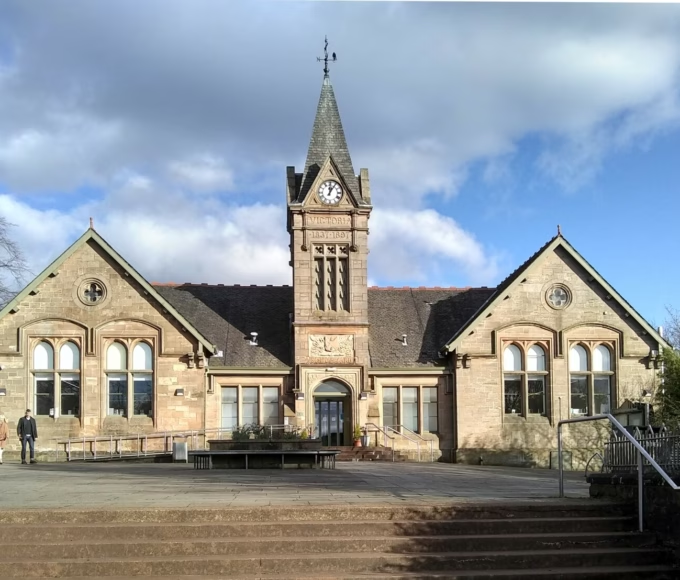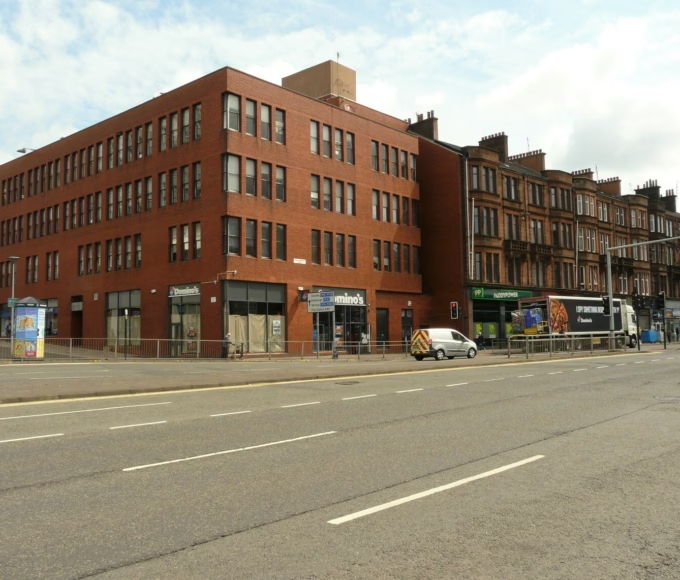


Finnieston is the area on the north bank of the Clyde between Glasgow city centre and the West End. It’s known for Argyle Street, a strip of restaurants, bars and pubs, and for the SEC and OVO Hydro down by the river. It’s a good area to live in if you like eating out and getting about without a car, but it’s busy and the newer flats aren’t cheap. Plenty of folk type Finneston or Finniston, but it’s Finnieston.
Last checked: 23 October 2026.
What is Finnieston?
There’s no hard line round Finnieston. Most folk mean Argyle Street from roughly Kelvingrove Art Gallery along to the Anderston end, plus the streets running down to the river and the SEC on the waterfront. Visit Glasgow lists it as an area in its own right, separate from the West End and the city centre. The postcode is G3.
The Scottish Government’s 2020 deprivation statistics group it with Kelvinhaugh next door as “Finnieston and Kelvinhaugh”, and Partick is further west. Finnieston Street runs down from Argyle Street towards the river, and Finnieston Quay is the riverside stretch, where the Radisson RED hotel and its rooftop bar sit. There’s no station called Finnieston now, though Exhibition Centre was called that from 1979 until 1986. The stations that do serve the area are covered below.
| Finnieston | The short version |
|---|---|
| Where | North bank of the Clyde, between the city centre and the West End |
| Main street | Argyle Street |
| Postcode | G3 |
| Stations | Exhibition Centre and Anderston (trains), Kelvinhall (Subway, for the west end) |
| Big venues | OVO Hydro and SEC Armadillo |
| Landmark | The Finnieston Crane |
| Rent, advertised in October 2026 | Most one-beds about £895 to £1,100 a month, newer riverside blocks about £1,470 to £1,520 |
Why is Finnieston so famous?
The food and drink
A stretch of Argyle Street is packed with restaurants, bars and pubs, and that’s what put Finnieston on the map. The Times put it top of its 2016 list of the hippest places to live in Britain, and Visit Glasgow, the city’s tourism site, says it still turns up regularly on lists of the UK’s hippest areas.
The SEC and the OVO Hydro
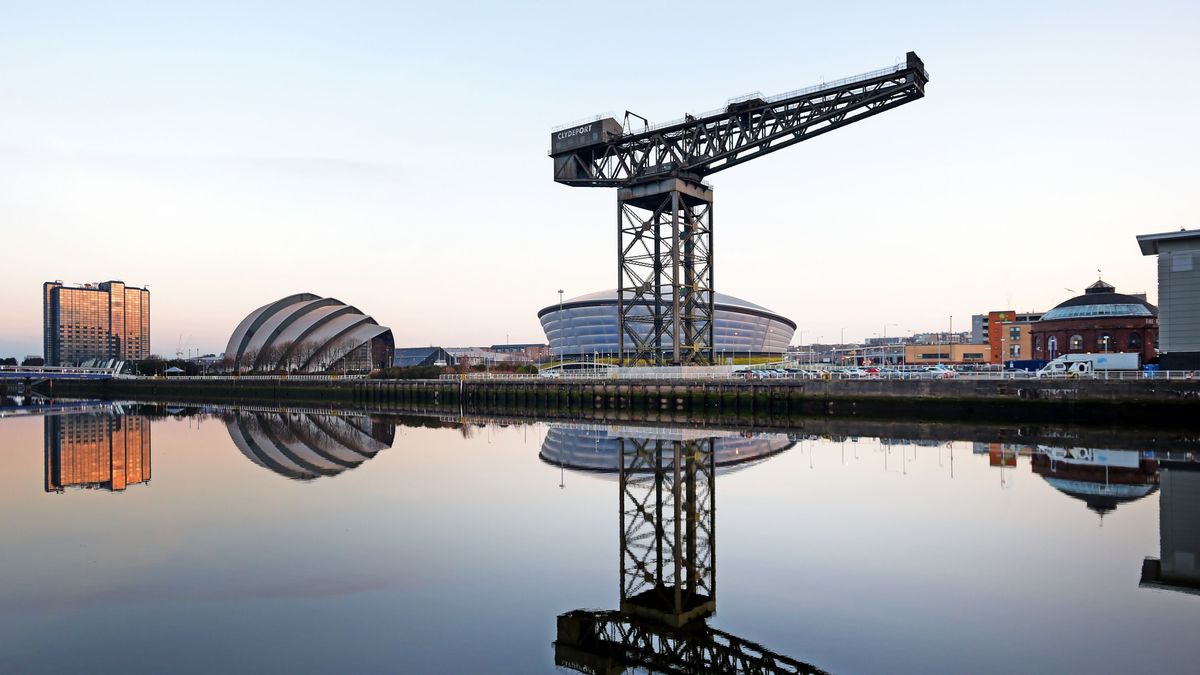
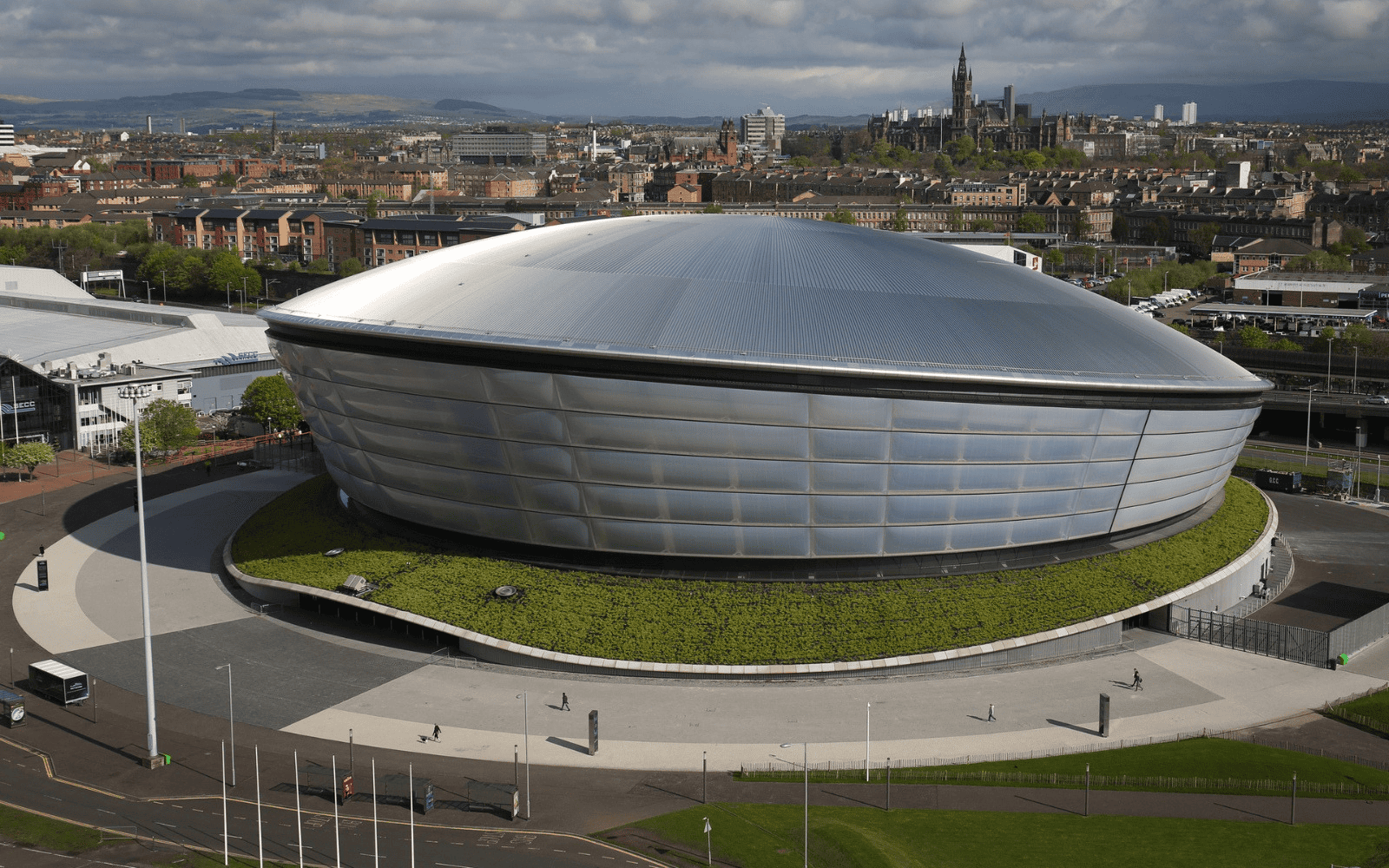
The Scottish Event Campus, or SEC, sits on the riverside, with the OVO Hydro (up to 14,300 people, says the SEC) and the SEC Armadillo beside it. On a big gig night the whole area fills up.
The Finnieston Crane
Officially it’s the Stobcross Crane, and it stands on Stobcross Quay. It’s a 175 ton cantilever crane, finished in 1931 for the Clyde Navigation Trust. It’s Category A listed, and Historic Environment Scotland says it symbolises Glasgow’s industrial past more than any other crane of its type.
The Hidden Lane
Look for the tunnel entrance at 1103 Argyle Street. It leads into the Lane, which has a tearoom, a gallery, an antiques centre and a few vintage and gift shops. Together with the nearby Hive it’s home to more than 100 studios, according to the Hidden Lane’s own site. Also look out for the statue of Charles Rennie Mackintosh sitting on his Argyle Chair at the corner of Argyle Street and Elliot Street, made by Andy Scott, the sculptor behind the Kelpies.
Best restaurants and bars in Finnieston
This is where Finnieston earns its reputation. The big change is that The Gannet shut on 31 December 2025 after twelve years, and Eleven Fifty Five has opened in the same spot. We checked everything below in October 2026 and left out places that have closed. For more across the city, see our guide to the best restaurants in Glasgow.
- Crabshakk (1114 Argyle Street) is the seafood place everyone talks about. The menu changes daily and it’s built for sharing, so order a few plates between you. On its August 2026 sample menu the smaller plates are mostly £10 to £20, the bigger dishes run from £23 to £40, and the lobster and langoustines can go higher. You can book a table, and the bar takes walk-ins.
- Eleven Fifty Five (1155 Argyle Street) is the new one, from The Gannet’s former chef-owner. It’s a bistro, with mains from £27 to £42 on the menu and daily specials that can cost more, and the Michelin Guide lists it as a new entry. It’s open Tuesday to Saturday from 5pm, with lunch Thursday to Saturday.
- Unalome by Graeme Cheevers (36 Kelvingrove Street) has one Michelin star, and it’s the one for a big occasion. On its October 2026 menus the tasting menu is £155 a person, with a £100 wine flight on top if you want one, and the lunch menu is £60.
- Porter and Rye (1131 Argyle Street) is the steakhouse. It’s been going since 2014 and it’s all about Scotch beef. They take card details when you book, so read the cancellation rules first.
- The Finnieston (1125 Argyle Street) does seasonal Scottish seafood and calls itself Glasgow’s premier gin bar, with more than 60 gins.
- Ox and Finch (920 Sauchiehall Street) is a short walk north of Argyle Street. It does sharing plates and has a Michelin Bib Gourmand.
- Gloriosa (1321 Argyle Street) is further west along Argyle Street. The food is Mediterranean-influenced, with wine from small independent European producers.
- Rocco’s (1116 Argyle Street) is Italian-American: 14-inch New York-style pizzas, chicken parmesan, and tableside tiramisu. The weekday Lunch Club is £9 (Monday to Friday, noon to 4pm). It’s open every day, until midnight Sunday to Thursday and 1am on Fridays and Saturdays.
- Derby Lane (1156 Argyle Street) is the brunch place, done New York style. It also does lunch, afternoon tea and dinner.
- Dockyard Social (95 to 107 Haugh Road) is open every weekend, with independent street food traders and events. It’s handy if you’d rather not spend restaurant money. Check the listings first, as some nights are ticketed.
- Lebowskis (1008 Argyle Street) has been going since 2007. It’s themed on The Big Lebowski, with over 30 kinds of White Russian and burgers on the food menu.
- For an old-school pub night, Visit Glasgow points to the Ben Nevis Bar, the Islay Inn and the Park Bar, which it calls the “Highland Triangle”, for whisky and live music.
If you’re only going to one, make it Crabshakk. For a special occasion, book Unalome or Eleven Fifty Five early. On a budget, try Rocco’s £9 weekday lunch, and remember Kelvingrove and the Riverside Museum are free.
Things to do in Finnieston
- Kelvingrove Art Gallery and Museum is free to get in (donations welcome) and sits on Argyle Street at the west end of Finnieston. Kelvingrove Park is right beside it, and the bandstand holds concerts and events in the warmer months.
- Riverside Museum is Glasgow’s transport museum. It’s free too, and sits where the Kelvin meets the Clyde, further west along the river. Good for a wet afternoon.
- Glasgow Science Centre is across the river. You can walk there from the SEC over Bell’s Bridge, which the Science Centre puts at 12 to 15 minutes from Exhibition Centre station.
- Clydeside Distillery (100 Stobcross Road) runs tours, and the one-hour Clydeside Tour is £19.50 a head.
- SWG3 (100 Eastvale Place) does gigs, club nights and art.
- Red Sky Bar is a rooftop bar on the ninth floor of the Radisson RED hotel on Finnieston Quay (25 Tunnel Street), with DJs at weekends.
- The SEC has the gigs and events at the OVO Hydro and the SEC Armadillo. Check what’s on before you plan a quiet night.
What’s it like to live in Finnieston?
Finnieston is mostly flats. There are old sandstone tenements off Argyle Street and newer blocks down by the river. That suits singles and couples more than families. In the Scottish Government’s 2017 population estimates, about nine in ten people in Finnieston and Kelvinhaugh were of working age, compared with roughly two in three across Scotland.
By day it’s calm enough, with cafes, the Hidden Lane and the museum on your doorstep. By night Argyle Street fills up with diners and drinkers, and it’s properly busy at weekends and on gig nights at the Hydro. If you want a quiet Friday, pick a flat on a side street rather than on Argyle Street itself.
Rent and house prices in Finnieston
Citylets says the Glasgow average in the second quarter of 2026 was £912 a month for a one-bed and £1,211 for a two-bed. It doesn’t split out Finnieston, so we looked at what was being advertised in and around Finnieston on Rightmove and Zoopla on 23 October 2026.
Most one-beds were £895 to £1,100 a month. The newer riverside blocks around Anderston Quay asked about £1,470 to £1,520. Two-beds ran from about £1,100 to over £1,800, with most between £1,300 and £1,650. Those are asking rents, so what folk actually pay can differ.
If you’re buying, Rightmove’s sold prices (Registers of Scotland data up to August 2026) show Finnieston properties averaging about £262,600 over the last year, and flats about £264,300. That’s an average across everything sold, so look at recent sales on the street you like.
Our guide to renting in Glasgow covers deposits and your rights.
Getting to Finnieston: trains, Subway and buses
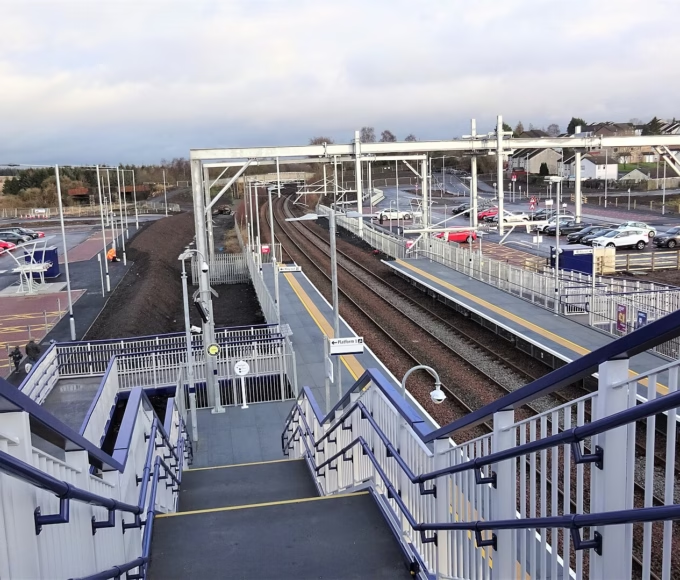
- Exhibition Centre is the SEC’s own railway station, right in the area. The SEC says there are six trains an hour from Glasgow Central, about every ten minutes, and the ride takes around three minutes. A covered walkway links the station to the campus, and there’s a Glasgow Taxis pick-up point next to the SEC Armadillo for after a gig.
- Anderston station (North Street) is next along the same line towards the city centre, handy for the eastern end.
- Kelvinhall is the Subway station for the west end of the strip, near Kelvingrove. Glasgow Life puts it about half a mile from the museum. SPT says an adult single is £1.80 with a Smartcard (since 5 January 2026) or £1.85 for a disposable ticket, and you can tap in with contactless. Our Glasgow Subway guide has the rest.
- Buses run along Argyle Street, and the SEC says three services run to the campus.
You can walk to the city centre, but it’s a fair hike from the west end of the strip, so the train is often easier. You don’t need a car here. Having one can be more hassle than it’s worth.
Is Finnieston safe?
Finnieston’s reputation is trendy, busy and a wee bit pricey. It isn’t known as a rough area. What you’ll notice most is the noise: Argyle Street is lively at weekends, and a big gig at the Hydro puts thousands of folk on the street at once.
The official figures are a mix. The Scottish Government’s deprivation index (SIMD 2020, the latest edition when we checked, using police figures from 2017 and 2018) splits Finnieston and Kelvinhaugh into seven small zones. Four of them are in the least deprived fifth of Scotland and one is in the most deprived fifth.
On recorded crime per resident, three of the seven zones are in the highest fifth in Scotland. One of those is the waterfront zone with the SEC and the crane, where only 727 people lived at the time. The Scottish Government’s own notes say town centres and places with music festivals or sporting events can look worse on paper, because crime is counted against the people who live there, not everyone who turns up. A zone with 727 residents and an arena in it fits that description.
The good bits are easy to see. Argyle Street is busy into the evening, the trains and the Subway are close, and there are always folk about. Same as anywhere in a busy city: lock your bike properly, keep your phone out of sight on crowded nights, and get home with a friend after a late one.
Parking in Finnieston
Parking is the weak spot. Many streets here are in Glasgow City Council’s controlled parking zones, so residents need a permit. Some newer homes don’t qualify for one at all, so ask the landlord or agent.
The council bases permit charges on your vehicle’s CO2 emissions, with extra charges for more than one permit at an address. Check Glasgow City Council’s parking page for the current rules and rates, and our guide to Glasgow parking permits explains the zones. On event nights at the Hydro or SEC, expect street spaces to be hard to find, so check the parking on your specific street before you sign a lease. The SEC has a multi-storey car park on the east of the campus, but the train is easier.
Schools and families
Finnieston isn’t really a family area. It can be done, but the flats are mostly one and two beds, and the restaurants outnumber the play parks. Anderston Primary, on Port Street, is one of the nearest primary schools for the eastern end, and St Patrick’s, a Roman Catholic primary on Perth Street, is close too.
Catchments go by address, so check with Glasgow City Council before you commit to a flat. You can search for nurseries and childcare on the Glasgow Families Information Services website, which the council runs.
Is Finnieston a good area to live in?
Yes, if you like eating out, want to walk or hop on a train to work, and don’t mind paying for the location. It’s not the one for you if you need space, a garden or a quiet Saturday night.
The good
- Some of the best food and drink in Glasgow on your doorstep.
- Trains, the Subway and the city centre close by, so you can manage without a car.
- Kelvingrove and the Riverside Museum, both free, within reach.
The not so good
- Noise at weekends and on gig nights.
- Rents on the newer flats.
- Parking, which can be a headache.
- Not many family homes.
If you like the location but want somewhere calmer, try Partick to the west, and our guide to the best areas to live in Glasgow compares the rest.

Written by Lewis McGuire. Last updated October 2026.